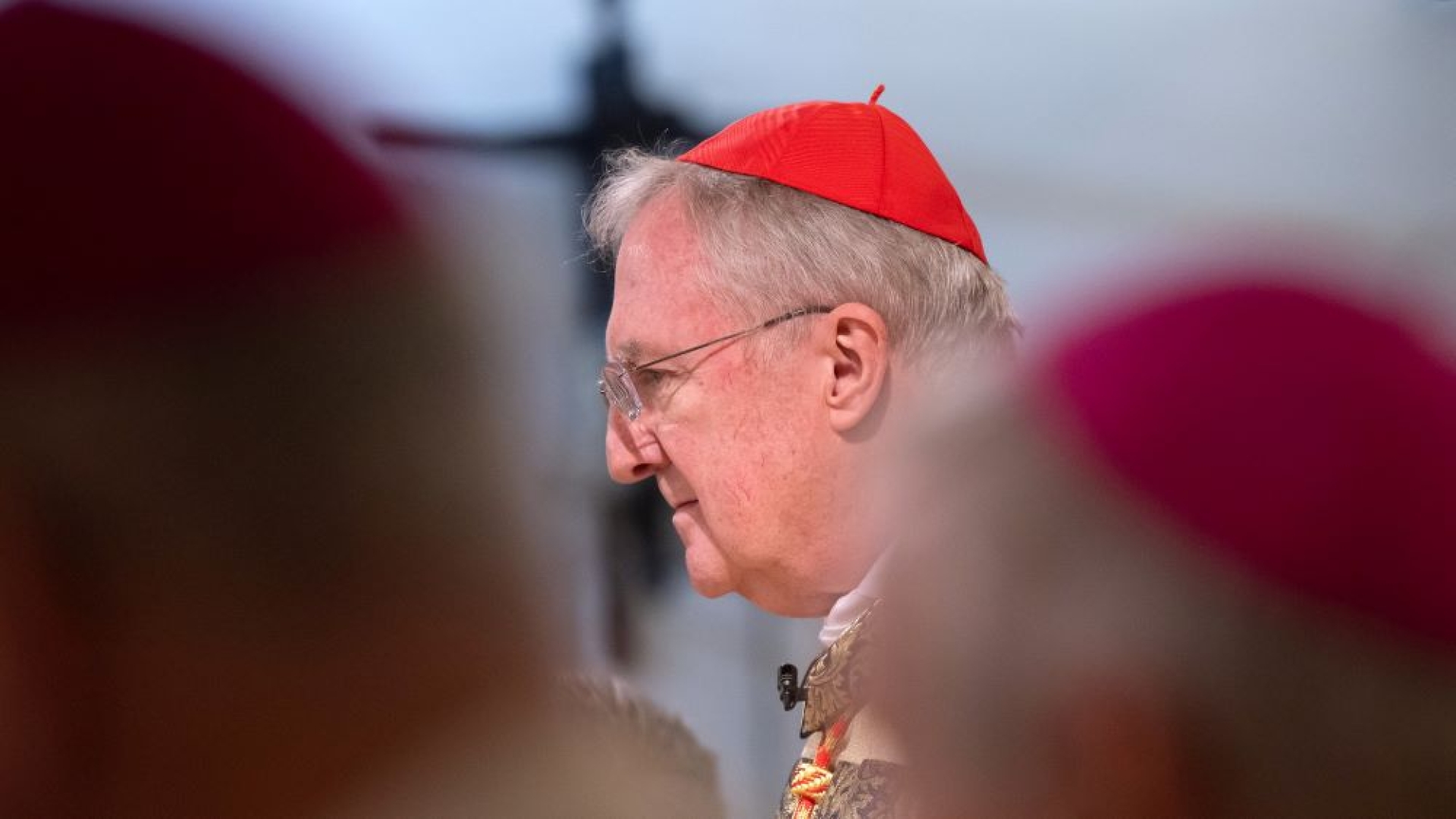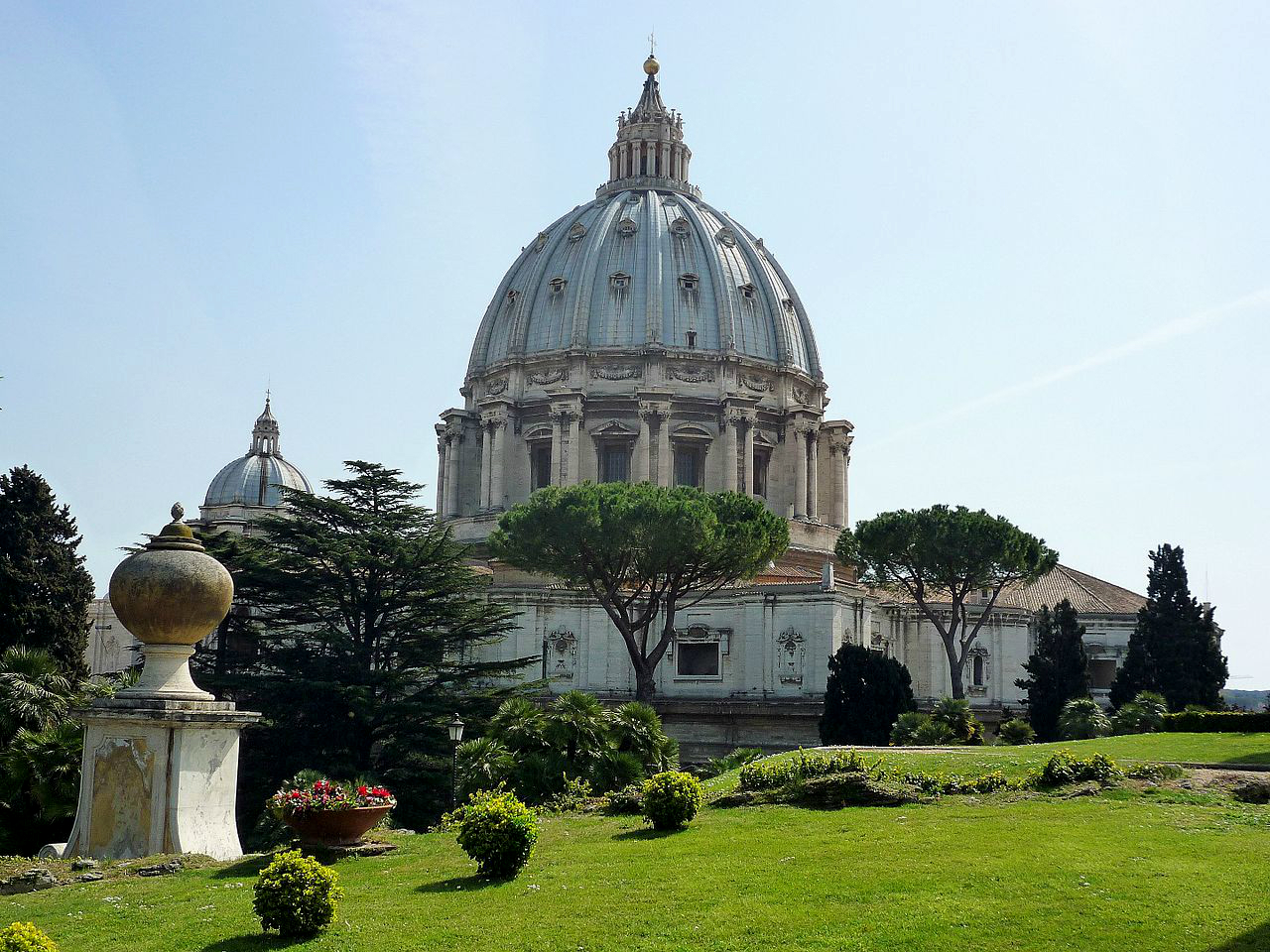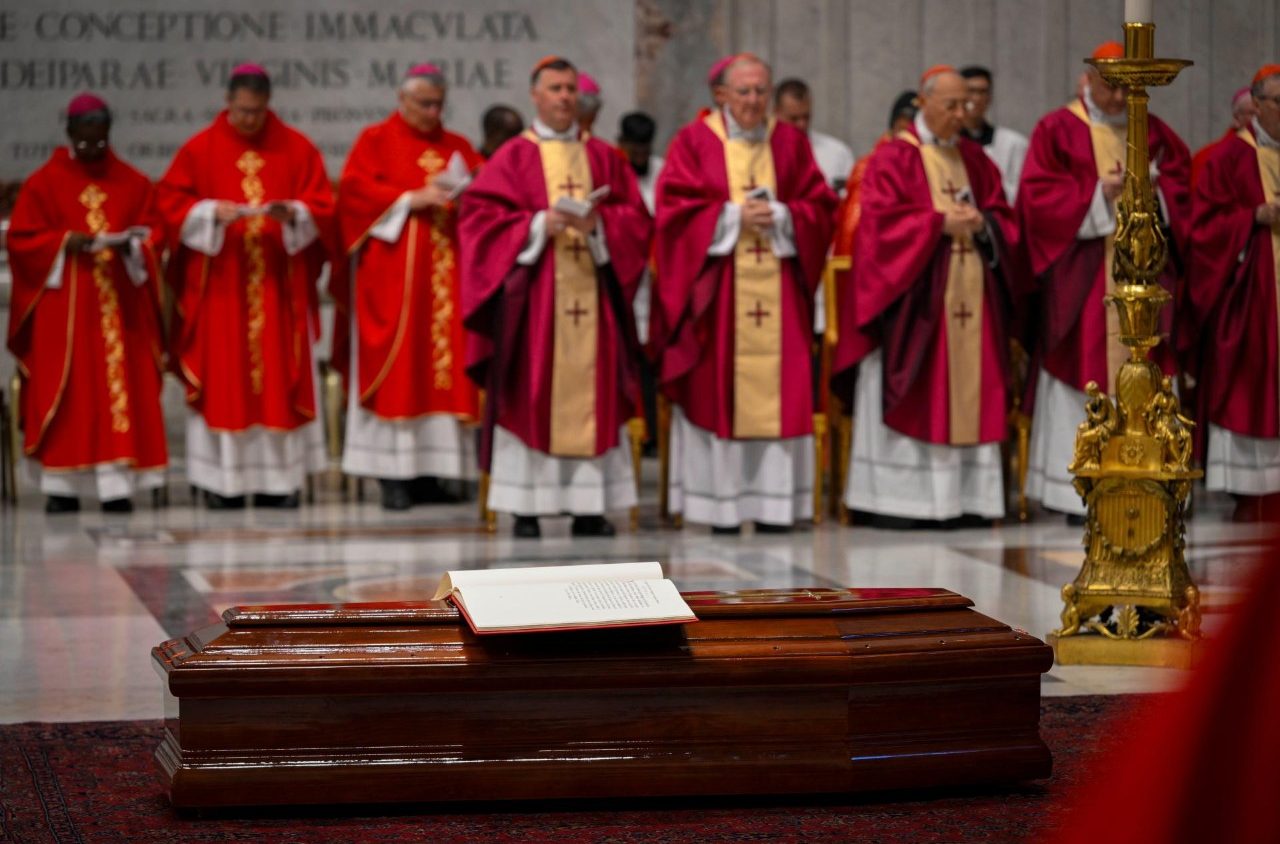
Vatican City - This afternoon at 4 p.m., at the Altar of the Chair in St Peter's Basilica, the funeral rites were celebrated for His Eminence Cardinal Paul Emil Tscherrig, former Apostolic Nuncio to Italy and the Republic of San Marino, and Cardinal Deacon of the titular diaconia of San Giuseppe in Via Trionfale. The liturgy marked the first funeral that Pope Leo XIV has presided over as Supreme Pontiff - and the new Pope chose to break with the practice followed by his immediate predecessors. Whereas in recent years the Roman Pontiff had limited his personal intervention to the concluding Rite of the Ultima Commendatio et Valedictio, leaving the celebration of the Eucharist to the Dean of the College of Cardinals, Leo XIV chose instead to preside over the entire rite, including the Eucharistic Sacrifice, surrounded by cardinals, archbishops and bishops gathered around the altar.
The Swiss prelate, born in Unterems in the Canton of Valais on 3 February 1947, died on the morning of Tuesday 12 May at the age of seventy-nine, following a sudden illness in his residence at the Domus Sanctae Marthae inside Vatican City.
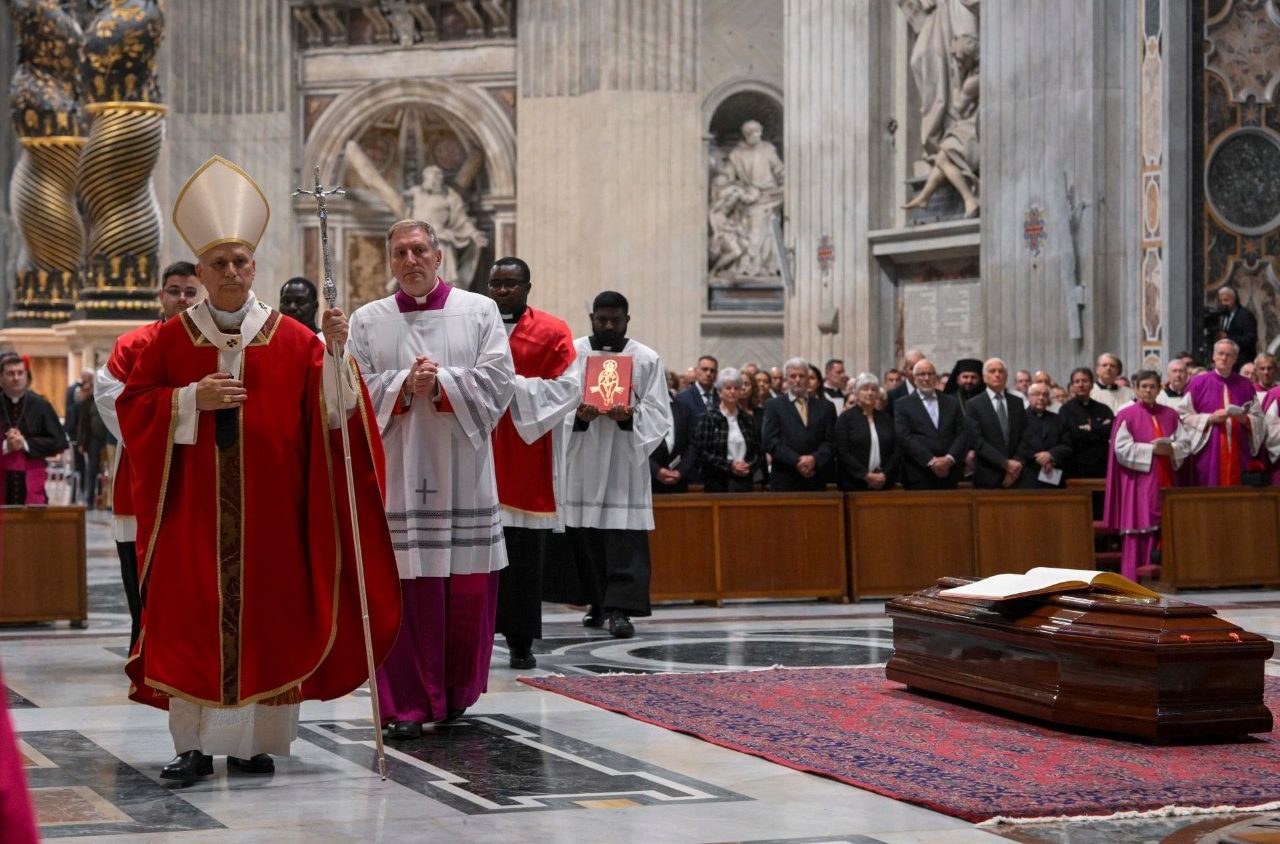
A homily on hope, service and the Paschal Mystery
In his homily, Pope Leo XIV framed the funeral as "the great and solemn moment of the encounter with the Lord whom he served generously, with the Friend beside whom he walked faithfully for an entire lifetime" - more than half of which, the Pope recalled, was spent in service to the Apostolic See, both in the Secretariat of State and in various Pontifical Representations across the world. The Holy Father dwelt at length on the quiet, often unobtrusive character of the late Cardinal's diplomatic ministry, describing him as one who, "with patience and self-denial", had worked "to gather in harmony the peoples entrusted to his care through obedience", facing "the obstacles and challenges that a Pontifical Representative is called to embrace for the good of all". Leo XIV traced the long arc of Tscherrig's missions: Burundi, the Caribbean, South Korea and Mongolia, the Nordic countries, Argentina, and finally Italy and San Marino - "a broad ecclesial and international experience", the Pope said, which bore witness to "his availability and his capacity for adaptation, in his pastoral charity, to very different settings".
Reflecting on the Gospel of Lazarus, the Pope said that Christ's raising of his friend was "a sign that we can recognise in the many miracles of return to life that charity brings about, also through our ministry and our daily commitment to the Gospel". Yet this, he continued, points beyond itself to "the greatest miracle: that of the resurrection to eternal life, which crowns every effort and labour of this life and brings its events to fulfilment beyond the limits of time". Quoting Pope Francis's address to the Diplomatic Corps of 9 January 2025, Leo XIV invited those present - and the Church's diplomats in particular - to "make hope flourish around them, as a response to the desire and expectation for good among peoples". Our world, he said, "has great need of messengers who can help it recover trust".
The Pope concluded by recalling the motto chosen by the late Cardinal at his episcopal ordination thirty years ago - Spes mea Christus, "Christ my hope" - and applying to him the words of Jesus to Martha: "Your brother will rise again… I am the resurrection and the life."
A life of quiet diplomacy
Ordained priest for the Diocese of Sion on 11 April 1974, the eldest of eight children of a Valais family, Tscherrig held a doctorate in canon law and entered the Holy See's diplomatic service in 1978. From 1985 to 1996 he served in the Secretariat of State in Rome, where he was closely involved in the preparation of the international journeys of Pope John Paul II. Appointed titular Archbishop of Voli and Nuncio to Burundi by John Paul II on 4 May 1996, he received episcopal consecration on 27 June of the same year at the Altar of the Chair in St Peter's - the very same altar before which his coffin lay this afternoon - at the hands of Cardinal Angelo Sodano, with Cardinal Henri Schwery and Bishop Norbert Brunner as co-consecrators.
Thereafter his diplomatic career took him to a remarkable range of postings: the Caribbean and the Antilles (2000–2004), South Korea and Mongolia (2004–2008), the five Nordic countries - Sweden, Denmark, Finland, Iceland and Norway (2008–2012) - and finally Argentina, where he served as Nuncio from 5 January 2012 onwards. On 12 September 2017 Pope Francis appointed him Apostolic Nuncio to Italy and the Republic of San Marino, making him the first non-Italian ever to hold that office. He served in that role until his resignation, accepted on 11 March 2024, on grounds of age, and was succeeded by Archbishop Petar Rajič.
Pope Francis created him Cardinal Deacon of San Giuseppe in Via Trionfale at the consistory of 30 September 2023. He took possession of his diaconia on 19 November of that year, and on 7 and 8 May 2025 took part as a cardinal elector in the conclave that elected Pope Leo XIV.
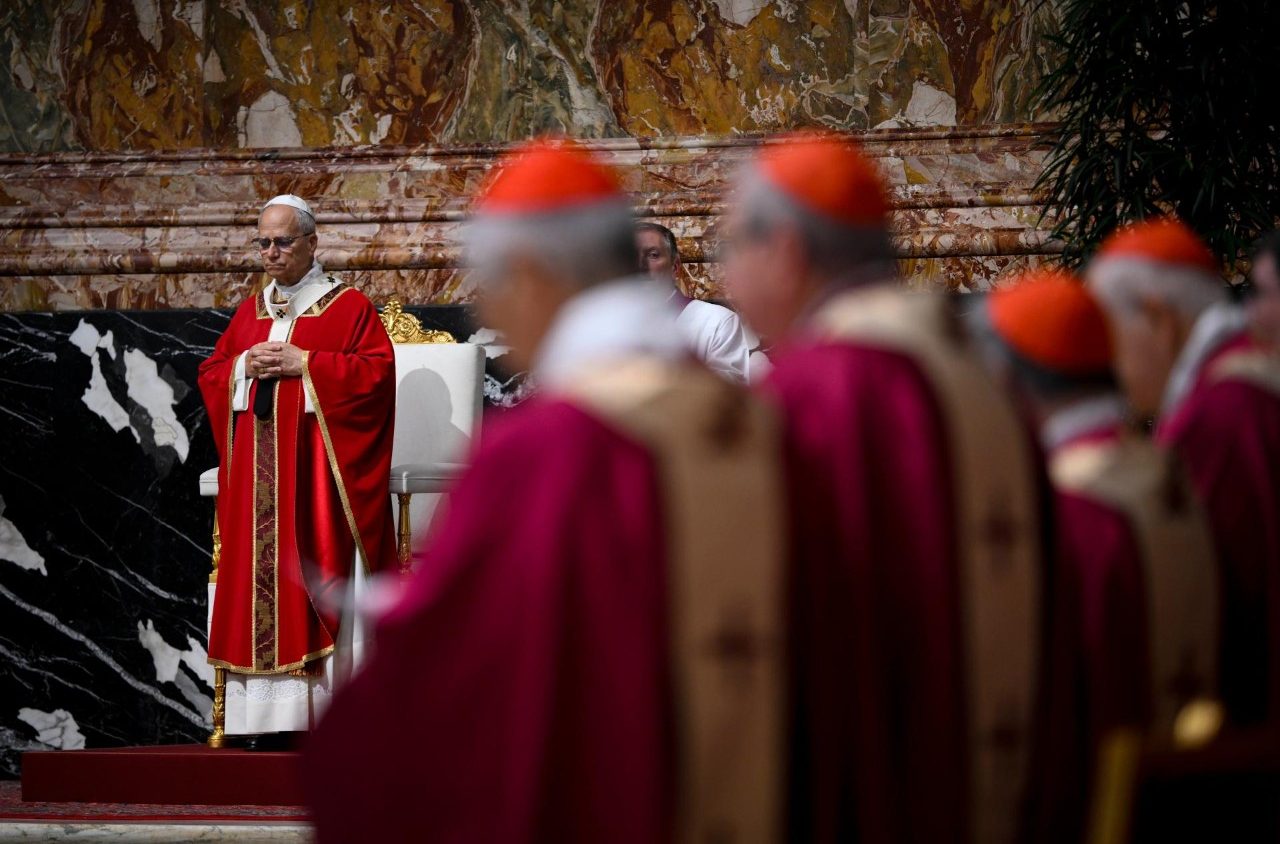
Bergoglio and Tscherrig
Pope Francis enjoyed good relations with the Swiss nuncio for one principal reason: when Tscherrig arrived in Buenos Aires, only a few months passed before Jorge Mario Bergoglio was elected Pope. In that brief interval Tscherrig showed himself courteous and accommodating to Bergoglio's requests, but the two men never had the time to enter into a relationship on truly serious matters. The contrast with the rest of Bergoglio's Argentine experience is striking. In Argentina he had poor relations with practically everyone, and above all with those who represented Rome and the Pope. Had Tscherrig remained in Buenos Aires a little longer, he too would have ended up quarrelling with him. It should not be forgotten that Bergoglio was angry with everyone because the bishops he proposed were not being appointed: the case of "Tucho" Fernández is the clearest example.
The episode recounted on the very night of the conclave - when the newly elected Francis telephoned the Nuncio asking him to inform the Argentine hierarchy and the Catholic community that it was not necessary to undertake the intercontinental journey for the Mass inaugurating his Petrine ministry, and that they might instead destine the money to a work of charity - was the clearest demonstration of how weak Bergoglio's real bond with his own ecclesial community in Buenos Aires actually was: a newly elected Pope does not normally discourage his own faithful from coming to share in the inauguration of his ministry, unless that relationship was already, from the outset, particularly tepid. In reality, Francis knew perfectly well that very few people would be coming from Buenos Aires - not as a matter of saving money, but because they knew him only too well. He therefore allowed this piece of news to be leaked precisely in order to justify the scant Argentine presence. The gesture had every appearance of pauperism, but it was a pauperism of convenience, as the following years would amply demonstrate, when Francis would prove perfectly willing to spend, and to spend gladly, on a great many other things. During the early years of the pontificate, Tscherrig was credited with "a patient work of stitching" in the relations between the Kirchner presidency and the Pope, and Francis later turned to him for mediation efforts during the political crisis in Venezuela.
A discreet figure to the end
The Nuncio, for his part, was always extremely obedient, and in any case he genuinely shared Pope Francis's style. One thinks, for example, of the hostility towards Benedictine communities that Tscherrig consistently harboured. One of his fixations was the territorial abbey - an institution he could not bear, and which he would have wished to dismantle wherever possible. He did not, in the end, succeed in doing so, but the Pope was entirely of one mind with him on the matter. When he was appointed Nuncio to Italy and the Republic of San Marino the result was a disaster. It is with him that the decline of the Apostolic Nunciature to Italy and San Marino began - a decline which, not by coincidence, also marks the beginning of the series of non-Italian nuncios to the peninsula. His years in office, moreover, coincided with the difficult relationship between the Holy See and the Italian Episcopal Conference. It was telling, in this regard, that today's funeral was marked by the absence of both Cardinal Gualtiero Bassetti and Cardinal Matteo Maria Zuppi. Tscherrig was a member of the Supreme Tribunal of the Apostolic Signatura, of the Dicastery for the Causes of Saints, of the Cardinalatial Commission of Vigilance for the Institute for the Works of Religion, and, from 18 May 2024, of the Dicastery for Bishops and of the section for first evangelisation of the Dicastery for Evangelisation.
fr.L.T.
Silere non possum