Vatican City - The Dicastery for Promoting Integral Human Development is one of the clearest examples of the tendency that has shaped the Roman Curia in recent years: creating vast bureaucratic catch-alls, giving them an almost limitless remit and then calling “reform” what has, in reality, been an enormous administrative mess. Francis’s project was presented as that of a Pope capable of streamlining the machinery and bringing the Curia back to essentials. The result was the exact opposite: offices merged only on paper, new appointments, new chains of command and a proliferation of posts to be handed out and protected. In the Vatican, many are convinced that they can distribute positions, salaries, titles and power. Francis handed out a great many of them.
This became particularly clear when Praedicate Evangelium was promulgated. It was not simply a case of jumping out of the frying pan and into the fire, many commented within the Leonine walls: this had gone well beyond that. The reform announced as a slimming cure for the Curia ended up producing a system that was more opaque, more sprawling and, in several cases, even more cumbersome than the one left behind by Francis’s predecessors.
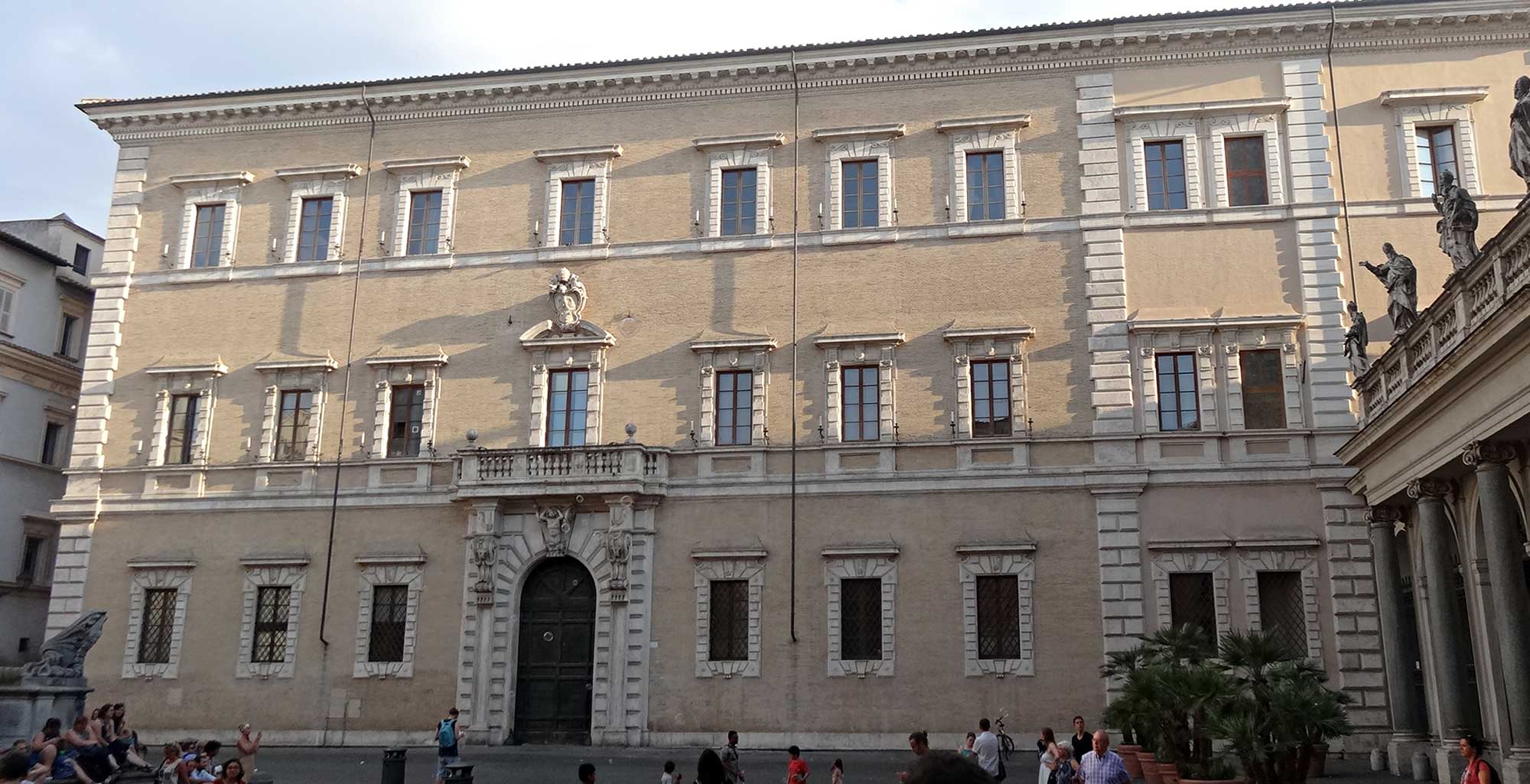
The Dicastery for development… of what, exactly?
The Dicastery for Promoting Integral Human Development was established by Pope Francis in 2016 and became operational in January 2017. It did not emerge from nowhere, but from the merger of four Pontifical Councils: Justice and Peace, Cor Unum, the Pastoral Care of Migrants and Itinerant People, and the Pastoral Care of Health-Care Workers.
The operation was presented as a simplification. In reality, it created a body that claims responsibility for migration, peace, employment, economics, healthcare, the environment, humanitarian emergencies, international cooperation, charity, human rights and the fight against new forms of slavery.
That is too much for it to be genuinely useful. The Church dealt with these matters for centuries without needing a Roman structure determined to comment on every international crisis, issue documents on every social phenomenon, convene conferences and produce programme statements. Many of these matters are already dealt with - and more competently, at that - by other Dicasteries. There are also dioceses, Caritas, missionary bodies, episcopal conferences, religious institutes, diplomatic offices and Catholic associations. There are specific areas of competence. The merger, instead, created a centre that claims a voice on everything and which, precisely for that reason, struggles to demonstrate any real effectiveness in anything.
The Apostolic Constitution Praedicate Evangelium gives the Dicastery an enormous field of action: the human person, dignity, human rights, healthcare, justice, peace, economics, employment, care for our common home, migration and humanitarian emergencies. It is a list so broad that it becomes impossible to draw a clear line between what belongs to Palazzo San Callisto and what ought to remain entrusted to the Secretariat of State, local Churches, charitable bodies and those who actually work on the ground. The result is a costly, oversized body that cannot clearly account for the relationship between the resources it uses and the results it achieves. Staff, consultants, events, travel, special projects, communications and a constant stream of initiatives that often remain confined to the Roman circuit of insiders. There is much talk of the poor, the peripheries and development, yet the Dicastery continues to function as a top-level structure, far removed from the concrete life of many local Churches.
The rhetoric of “integral human development” has therefore become a formula capable of accommodating anything. Environmentalism, ethical finance, migration, cooperation, healthcare, employment, combating trafficking and even reflection on global economic models all fit within it. They have put the gardeners of Castel Gandolfo in there, rubber ducks and even fresh air. But do we really need a Vatican office for every single issue, complete with directors, under-secretaries, consultants and a bureaucratic machine that produces language above all else? Documents nobody reads, press releases nobody republishes, and so on.
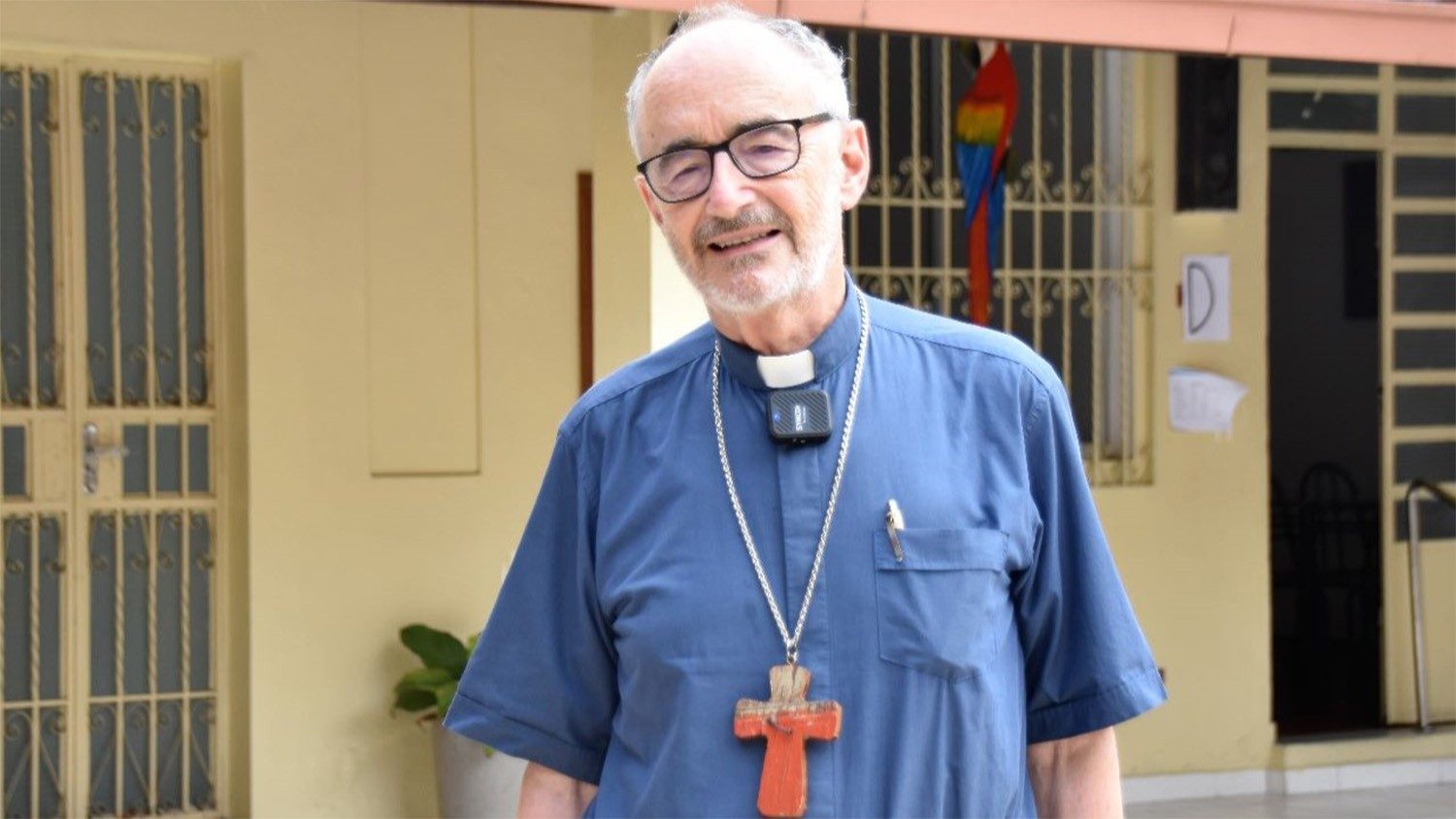
A Short Hop from Canada to the Vatican
Over the years, this Dicastery has become Michael Czerny’s personal territory. The Canadian Jesuit cardinal, who initially arrived to lead the Migrants and Refugees Section, gradually built around himself a network of people from the academic world of the Gregorian: figures he came to know along the way and then brought inside, one after another, with appointments and functions tailored to suit them. One was appointed the Dicastery’s theologian, another became his trusted adviser; each was inserted, in one way or another, into a structure that was meant to rationalise the Curia and which instead turned into a jobs scheme for people tied to the Prefect and his personal ecclesial vision.
Czerny continues to appear everywhere wearing his heavy pectoral cross made from the wood of migrant boats, which has by now become the symbol of a period marked more by carefully staged gestures than by governance. When he is invited to parishes, he asks the local priests to prepare his homily for him. This is the level to which the cardinalate has been reduced. The cardinal will turn eighty on 18 July. The question of succession has been open for months, and nobody inside the Dicastery is unaware of it.
The Economist Nun
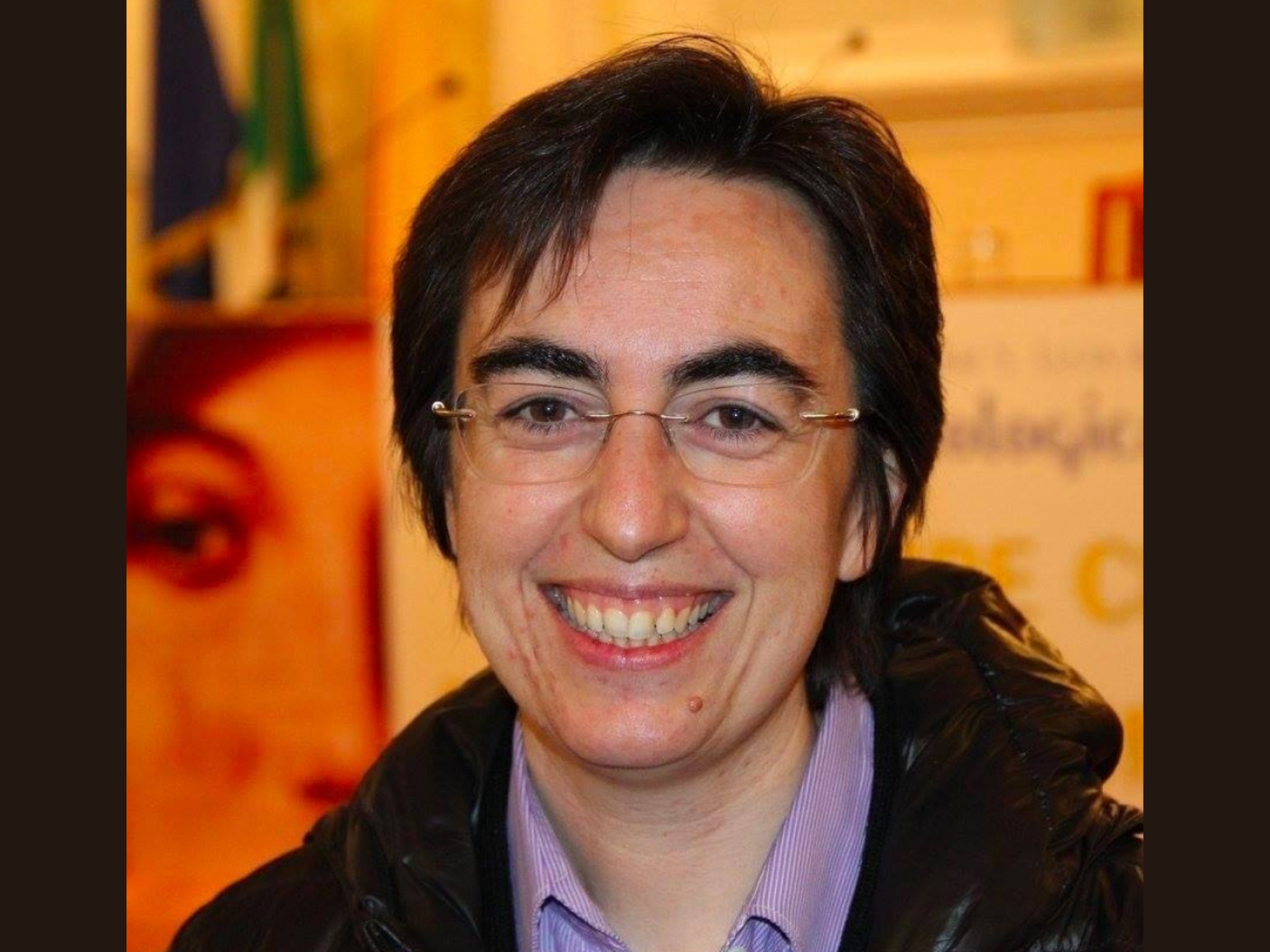
The person working most intensively to inherit the cardinal’s role is Sister Alessandra Smerilli. The Salesian religious entered the Dicastery in 2021 as Under-Secretary for the Faith and Development sector. A few months later she became acting Secretary and, in April 2022, she received her permanent appointment as Secretary. It was a remarkably rapid rise, accompanied by a constant presence in the places where the Curia’s balances of power are shaped. For some time, the Salesian also waged a campaign against Cardinal Peter Turkson.
Over time, Smerilli has built an ecclesiastical career based on relationships, positioning and the ability to identify the centres of power. Within her religious congregation and later in Roman ecclesiastical structures, she has always sought appointments, visibility and positions of responsibility. Her arrival at the Dicastery for Promoting Integral Human Development offered the ideal setting: a fluid body with no clear boundaries, where personal activism can count for more than measurable results.
Sister Alessandra Smerilli’s closeness to Archbishop Roberto Campisi, formerly Assessor for General Affairs at the Secretariat of State and now packed off to serve as the Holy See’s Permanent Observer to UNESCO, is one of the factors that helped her gain access to the circles that matter. The two also shared institutional appointments, the most recent being on the Holy See’s Commission for Donations. It was Campisi who wanted her in that role. With the election of Leo XIV, however, things did not go well at all for the Sicilian prelate, and that commission fell into disfavour within months of its creation.
During Francis’s pontificate, Smerilli moved with particular ease in an environment where speaking ill of others could paradoxically become the quickest way of winning the sovereign’s trust. It was a toxic dynamic, fuelled by those who turned denunciation, suspicion and the continual creation of enemies into instruments of personal advancement. Under Leo XIV, the religious sister’s strategy has not changed. Smerilli has repeatedly gone to audiences in the Papal Apartment to describe those around the Pope as unreliable and to present herself as the only interlocutor genuinely capable of protecting him from the manoeuvres of others.
The message has always been the same: everyone wants to use the Pope, everyone wants to deceive him, everyone has ulterior motives; she does not. She is supposedly the loyal and disinterested person, ready to defend the Pope from those trying to influence him.
The same logic emerged even more clearly when Leo XIV removed Campisi from the Secretariat of State, after years in which he had helped to create an atmosphere that had become unbearable. In that case too, Smerilli maintained that the Pope was the victim of “other people’s” power games.
The reasoning is simple: if the Pope does what she considers right, then he is acting freely; if he makes a different decision, he automatically becomes the victim of pressure and manoeuvring. Smerilli is therefore proof that certain distortions have no sex and are not prevented by religious status. The syndrome is always the same, and is perhaps one of the most widespread in the Catholic Church: using proximity to power to isolate others, delegitimise them and turn every decision made by others into a conspiracy, unless it happens to coincide with one’s own interests. It is an old tactic, but it continues to work within these walls. Those who manage to present themselves as guardians of the Pope’s confidence gain an enormous advantage over those who work without constantly constructing an enemy to deliver to their superior.
Smerilli has been working for some time to secure Czerny’s position. She is relying on the usual rhetoric of the “woman Prefect”, because that is what gets attention now. Leo XIV does not care for this little charade: the Pope places greater emphasis on reliability and competence.
The problem, however, is that when people who are neither reliable nor competent are regarded as such, one ends up regretting it – as has already happened with other appointments.
Smerilli is aware that she has no real expertise – after all, what expertise would one need to lead this kind of Dicastery? – but she pretends to be loyal to Leo XIV. Her goal is to become the third woman to lead a Roman Dicastery: the third because, unfortunately, she did not manage to be the first. This would follow the appointments concerning the Dicastery for Institutes of Consecrated Life and the Dicastery for Communication, without even considering the female presence at the top of the Governorate. Yet the question remains the same: are women appointed because they are competent and possess the necessary qualifications, or simply because the press likes it and applause follows?
The Power of Governance in the Church
Without forgetting that, as far as the Dicasteries of the Roman Curia are concerned, women cannot be appointed because lay people or religious – men or women – cannot be appointed. The Code is very clear. Instead of wringing our hands because liturgy, lace and frills are not discussed in consistories, perhaps we should ask why nobody questions Gianfranco Ghirlanda and his merry band about how it is possible to appoint people who do not possess the power of jurisdiction to lead a Dicastery. Perhaps it would be useful to hold a consistory in which someone explains, once and for all, whether the capacity to govern in the Church derives from the sacrament of Holy Orders or not. And perhaps to put an end to this constant revolving door of lay people who enter, exploit the Holy See and the Pope, then leave and, once outside, also throw a little mud and venom at the Institution. In the Vatican, however, symbolic considerations risk prevailing over everything else. They always have. Every appointment of a woman is presented as an achievement in itself, almost as though it were exempt from any scrutiny. Yet precisely what is happening at the Dicastery for Institutes of Consecrated Life should require more serious reflection.
The Dicastery for Deconsecrated Life
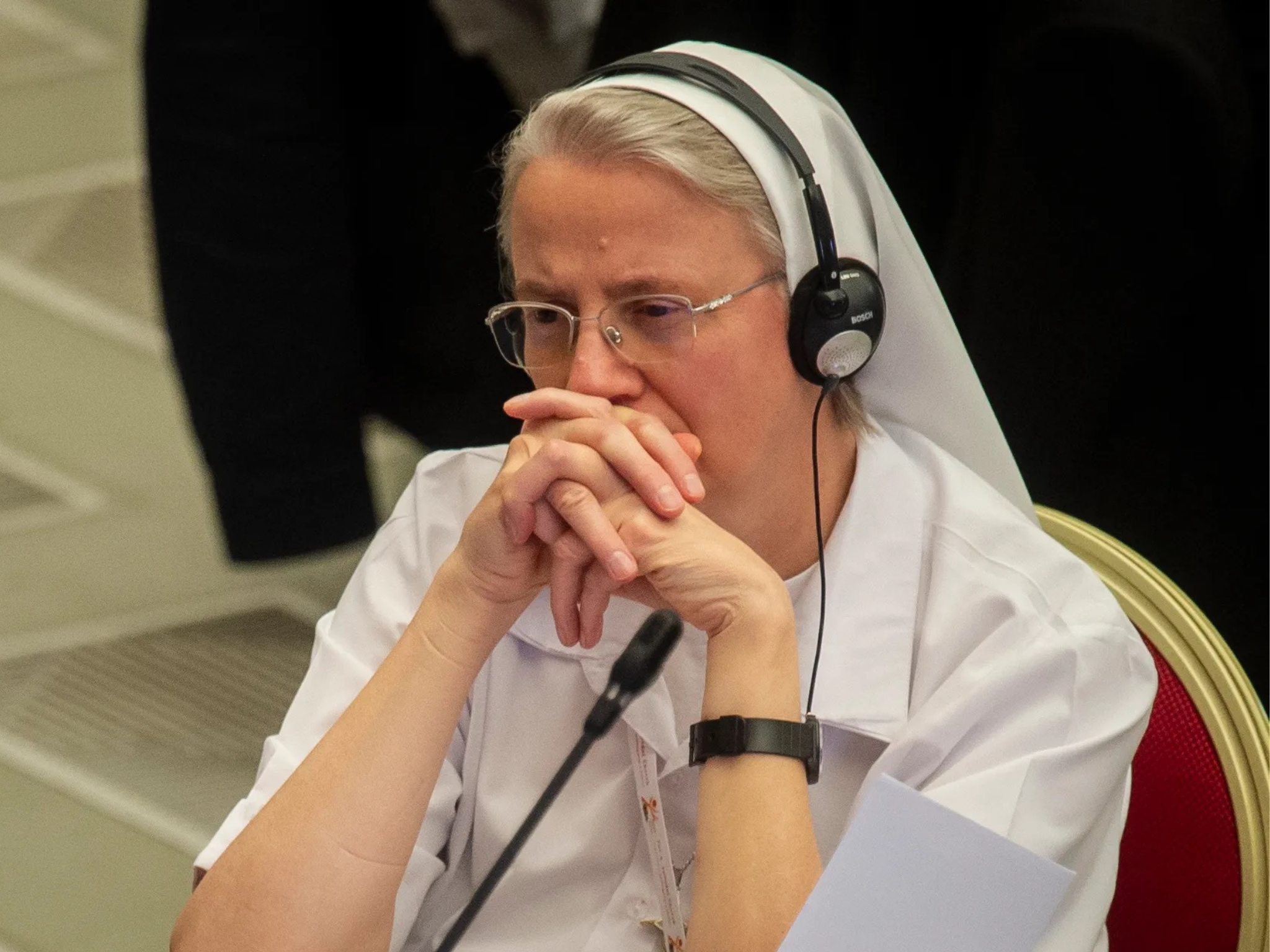
Sister Simona Brambilla was presented as the sign of a new Curia, closer to people, more capable of listening and less clerical. The reality described by religious men and women, superiors and those responsible for institutes is very different. Appointments are granted after extremely long waits, people are treated coldly and many interlocutors even prefer to turn to Cardinal Ángel Fernández Artime, the Pro-Prefect, because speaking with Brambilla is regarded as a difficult and often humiliating experience.
The climate created within the Dicastery by this religious sister and the Focolare member Tiziana Merletti has become unbearable for many. Without forgetting that these women do not, in practice, live religious life. In short, appointing a woman is not enough to make an office more humane. On the contrary, very often the dynamics become far worse than those that came before. It is not enough to speak of listening, synodality and closeness in order to transform a system.
One must know how to receive people, address problems, respect those who arrive after years of service in religious congregations and avoid treating every interlocutor as an inconvenience. The tragedy of some of these “promoted” figures is that they believe they must prove themselves “more and more”, and end up becoming emotionally detached and permanently defensive.
Sister Alessandra Smerilli embodies the same model: power built through the control of relationships, a constant presence around decision-makers and the ability to turn every institutional step into personal advancement. This is not what the Dicastery for Promoting Integral Human Development needs. Nor would the solution be to replace Czerny with Smerilli while leaving intact a machine that has shown itself to live above all on ideology, conferences and bureaucracy.
Leo XIV should ask whether this Dicastery still makes sense in its present form. A serious accounting should be demanded of expenditure, staff, consultancies, projects and results produced from 2017 to the present day. It should be established how many offices are truly indispensable, how many appointments have been made on the basis of competence and how many, instead, on the basis of belonging to personal and academic networks.
And he should prevent Czerny’s succession from becoming yet another power operation built in the corridors of the Curia at the expense of a man who, naturally, does not know what is really happening in every Dicastery. Put simply: does the Holy See really need this broom cupboard of sinecures?
fr.R.T. and M.P.
Silere non possum