Milan – “There is a need for a space of freedom that allows a dialogue which does not build walls, but starts processes.” These words belong to Fr. Julián Carrón and were spoken in September 2015. In those words - apparently “only” cultural - there is instead a spiritual choice and also a governance decision that would mark the following years of Comunione e Liberazione: not turning the movement into a political alignment, precisely at a time when, inside and around CL, pressure was growing to do exactly that.
This is the fifth part of the investigation into what has happened to CL in recent years. 2015 is a turning point: not so much because of a single event, but because it makes visible the conflict between two opposing ideas of Christian presence. On one side, an organized minority demanding a “compact” CL, mobilizable and legible as a bloc in the public arena; on the other, Carrón and the entire body of the movement - Fraternity and Memores Domini - who reject that logic and relaunch with a keyword that in 2015 becomes both title and line of governance: “disarmed beauty.”
The Family Day issue: the demand to line up “the entire movement”
In 2015, those who want a politically engaged CL push for CL to take part, as a single body, in the Family Day. In that context, pressures and appeals arise for the president to “deploy” the movement: Giancarlo Cesana, the Tempi circle, Giovanni Maddalena, Mario Molteni, Andrea Perrone are identified as protagonists of a line that asks CL to present itself as a political-cultural subject, not merely as an ecclesial community. The issue is not the presence of individual members of CL - which in Italy is a historical and structural fact - but the claim to drag the identity of the movement into a demonstration as a test of loyalty, measuring communion with an external indicator: a position.
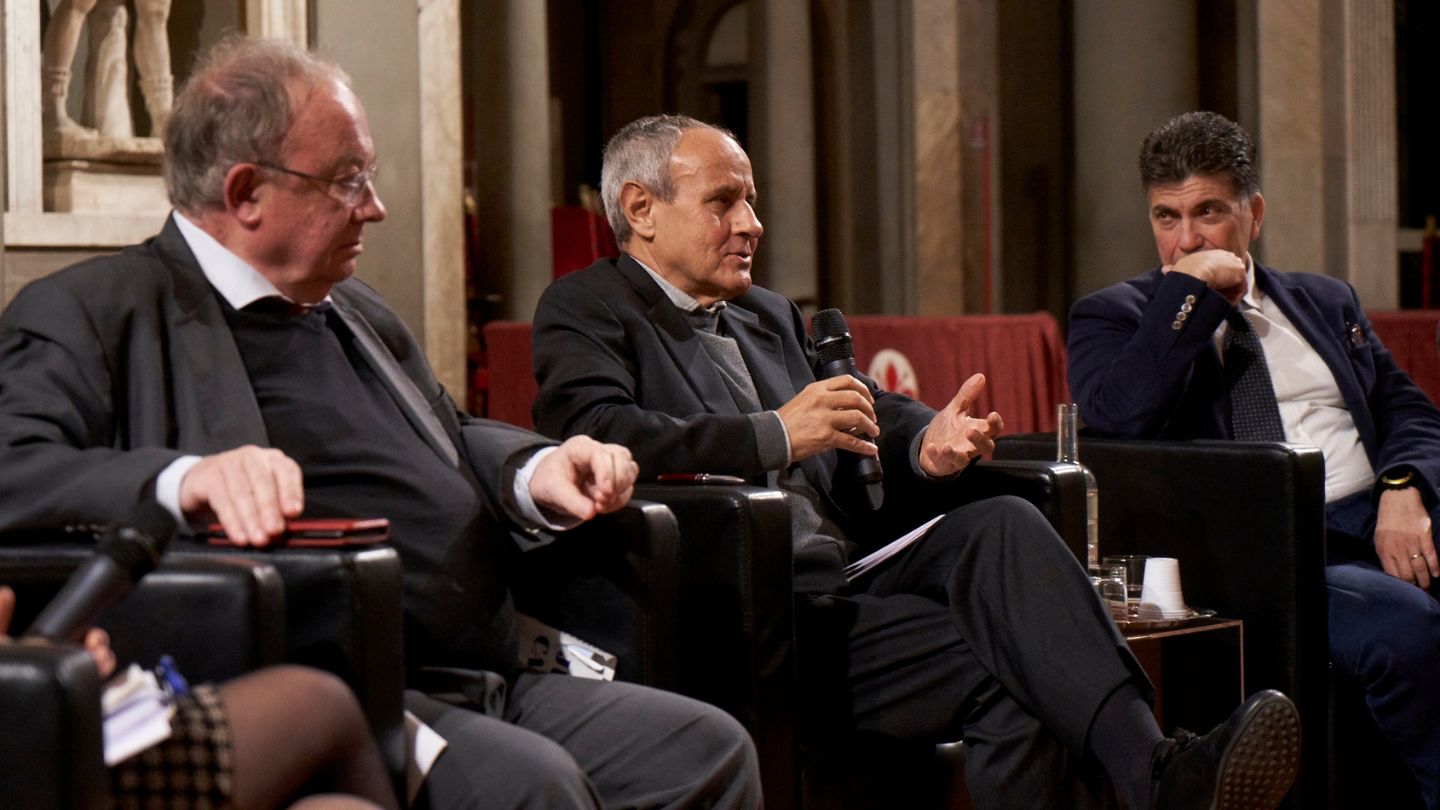
September 2015: same-sex unions, adoption, surrogacy. And above all: freedom
On 16 September 2015, Carrón gives an interview that, in the climate of those months, has the effect of a detonation. The topic includes same-sex unions: Carrón starts from a fact of reality - a plural society - and shifts the question to the type of recognition and the social consequences, calling into question family, children, adoption. The most significant passage, however, is not a compromise formula: it is the method. Carrón recounts questions posed also by homosexual persons (for example about the future of children and the absence of a female figure) and connects the theme to surrogacy, identified as an issue that touches the dignity of women. Then comes the line that explains everything else: “There is a need for a space of freedom that allows a dialogue which does not build walls, but starts processes.” It is a reversal of the ‘militant’ paradigm: not the construction of an identity front, but cultural work that does not renounce truth and does not reduce itself to propaganda.
“There are no CL politicians”: the distinction that upends plans
In the same interview, Carrón reiterates a distinction that - in 2015 - becomes intolerable for those who want CL as a unitary political subject: separating the movement from the actions of politicians who belong to it. Carrón states that this distinction is “essential” and “can only do good” both to CL and to politicians. Translated: CL cannot be enlisted. The movement does not sign, does not take sides, does not become an apparatus. Responsibility for public engagementremains personal and, precisely for that reason, more serious: not protected by a brand, not covered by a collective identity.
Disarmed beauty: the underlying thesis against the “armed” temptation
That same year Carrón publishes Disarming Beauty: Essays on Faith, Truth, and Freedom. In common usage, “disarmed” is often mistaken for “weak.” In the book, however, to disarm means rejecting the idea that faith must impose itself as power or be reduced to ethical coherence: Christianity, Carrón insists, is first and foremost an event, something that happens and generates a new subject. Here lies the heart of the fracture: if Christianity is an event that attracts freedom, then it cannot be defended like an ideological fortress. In the book Carrón insists on witness as the form of Christian presence in a pluralist society: not complaint, not claim, not pressure, but being oneself as the sign of a life changed by the encounter with Christ. Precisely because the issue is freedom, Carrón also links the contemporary crisis to the risk of manipulating desire: the “reduction of desires” is identified - quoting Giussani - as a “weapon of power.” It is a direct blow to the idea of a religion used as an instrument of social control.
A concept that in May 2024, speaking at the Assembly of the Italian Association of Cultural Centers in Milan, Davide Prosperi would attempt to explicitly overturn with a deliberately polemical and divisive rereading, and one that is not Catholic at all, by speaking of “armed beauty.” After acknowledging that Carrón’s Disarmed Beauty indicated a witness capable of attracting without imposing, Prosperi states that “one must not forget that beauty is always, in a certain sense, also armed,” specifying that the beauty of Christ would be a “sword,” capable of “contesting,” “wounding,” and “entering into struggle” with the world - not through external instruments of power, but as splendor veritatis, the intrinsic force of truth opposing the world’s measures. It is a thesis that, linguistic cautions notwithstanding, reintroduces a conflictual and polarizing logic, because it turns witness into opposition and beauty into a principle of clash, distorting its evangelical meaning. And this is where the concept shows all its weakness: it is not only theologically forced, but stands in open contrast with what Leo XIV has consistently reaffirmed since the beginning of his pontificate. In his first Urbi et Orbi blessing on 8 May 2025, the Pope spoke without ambiguity of a “disarmed and disarming peace, humble and persevering,” directly linking it to the style of the Risen Christ who refuses every form of violence and imposition. The same line runs through the Message for the 59th World Day of Peace (2026), where Leo XIV states that “the peace of the Risen Jesus is disarmed, because disarmed was his struggle,” and warns against a culture that justifies rearmament, deterrence, and even an “armed notion of defense and security,” denouncing them as fruits of fear, not of evangelical trust. Speaking to Italian diplomats, the Pope explicitly asked to “disarm words,” defining offense and propaganda as a real “war of words” and indicating dialogue, listening, and prudence as the only Christian path to peace. To speak today of “armed beauty” risks betraying the heart of the Gospel and placing oneself outside the horizon indicated by the Pope: not a Church that fights with sharper words, but a Church that disarms, because only what is disarmed can truly be disarming.
Davide Prosperi grows under Carrón’s gaze
In 2015, Davide Prosperi not only shared but explicitly praised Carrón’s approach to disarmed beauty. At CL’s Beginning-of-Year Day (Assago, 26 September 2015), Prosperi stated unambiguously that “God’s response to the ‘crisis’ of the times is not a discourse, but the event of a beauty, a disarmed beauty,” directly recalling Carrón’s newly published book and pointing to it as the key to avoiding a Christianity reduced to values, ethics, or cultural battle. In that context, disarmed was not an adjective to be balanced, but the radical alternative to every logic of confrontation. In 2024, after carrying his project through, Prosperi maintains that beauty would also be “armed,” capable of “wounding” and “contesting” by entering into struggle with the world, thus transforming a category conceived to defuse conflict into a formula that reintroduces it, albeit in spiritualized form. Prosperi’s contradictions, however, do not begin here at all. To grasp them fully one must go back, because in the story of Comunione e Liberazione a pattern already seen elsewhere resurfaces - at Bose and in not a few monastic and religious communities: the deputy who, in the shadows, works and maneuvers against his superior until replacement becomes inevitable. Thus, while Carrón claimed a movement without a hunger for politics and power, in practice someone wielded the weapons of language and denunciation to delegitimize and demolish those who did not orient CL in the desired direction. In practice, Davide Prosperi, whom Carrón himself wanted as his deputy, not only repeatedly took positions - during Diaconia meetings - that were distant from those of Carrón and of others in the Fraternity and the movement, but in 2016 this stance became public; and in the meantime, as explained in the previous installment, there were already those studying how to circumvent the Pope himself.
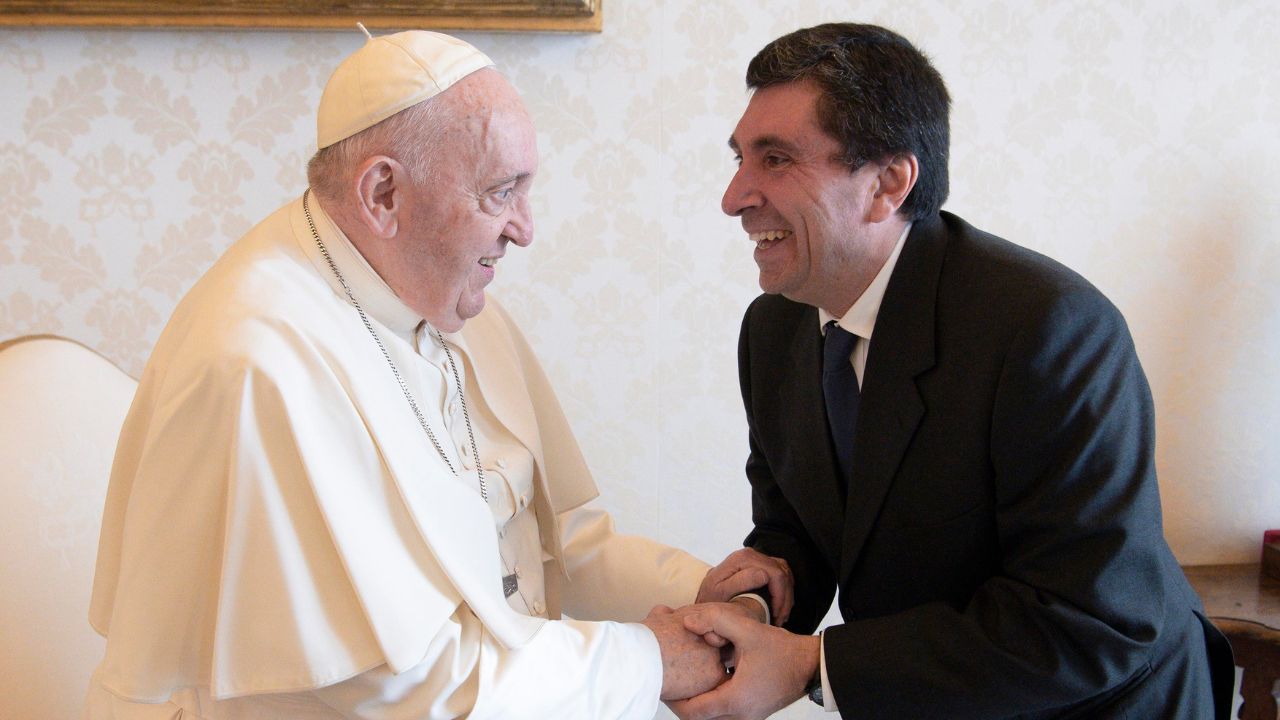
Two ways of conceiving faith
Language and method are in clear opposition. On one side Fr. Julián Carrón, who, in the Corriere della Sera interview of 16 September 2015 and in the 24 January 2016 letter (Traditional Rights and Foundational Values), clearly reiterates that the contribution of Christians cannot be reduced either to alignment or to confrontation: beauty is disarmed, it does not need “external help” to communicate itself, it addresses reason and freedom, and dialogue - even on the cultural and political level - must “not build walls, but start processes.” Even before divisive issues such as civil unions, Carrón refuses the logic of square against square and insists that only a different life, witnessed in freedom, can truly affect the fabric of society.
On the other side stands Davide Prosperi, then Carrón’s deputy, who together with Giancarlo Cesana signs - in collaboration with Tempi - the article “We love life more than they desire death,” published on 25 December 2015, that is, eleven days after Carrón’s interview. The register is radically different: the world is described as traversed by ideologies of death and by “messengers of nothingness,” against whom it would be necessary to defend oneself and take a stand. The text builds an openly oppositional framework - we who love life against them who love death - and invokes the urgency of a cultural and identity reaction, presented as indispensable to confronting the evil said to threaten Western society. From these interventions alone the divergence already appears clear: Carrón insists on a disarmed, non-conflictualChristian presence that rejects clash as a method; Prosperi, in the same time frame, instead adopts a polarizing grammarthat ends up legitimizing confrontation as a form of public witness.
Carrón does not react with retaliation: he is a meek man and never believed that those who worked alongside him in governing the movement and the Fraternity had to share all his positions. Despite those public statements - and, those present at meetings report, also “many others” divergences kept “off the website” - Carrón continued to recognize and appreciate Prosperi’s freedom, to the point of supporting his election in 2017 and again in 2020. “If Carrón had not wanted Prosperi, he certainly would not have been elected,” some internal sources confide, recalling that Prosperi, “despite often holding positions different from those of the majority,” was elected unanimously.
In Rome, the work begins
As reconstructed in the fourth part of this investigation, in 2018 the axis formed by Mario Molteni and Andrea Perrone - together with other Memores Domini and figures linked to Giancarlo Cesana- manages to gain access to Santa Marta. It is a passage that, in fact, shifts the balance: in Pope Francis’s eyes the perception of Comunione e Liberazione changes, and with it the movement’s internal room for maneuver.
That outcome, however, matures on ground already marked in the preceding months. From Francis’s election, the segment of CL furthest from the Tantardinian area - associated with Massimo Camisasca, Luigi Negri, the San Carlo Fraternity - does not welcome the new Pope with enthusiasm and struggles to follow his approach. Carrón is aware of this and addresses it directly in audiences with the Pontiff: in public and in internal discussion he insists that the key is not “like it or not,” but understanding what is at stake. It is in this framework that, in an interview with Crux, Carrón formulates the summary phrase: if one does not recognize that Francis is the “cure,” it is because one has not understood the “disease” - that is, the scope of the “change of era” and the cultural crisis that, in his view, the Pope is confronting with often disconcerting gestures and pastoral choices.
Yet while Carrón invites the movement to read Francis as a necessary response to a crisis far deeper than a simple intra-ecclesial dispute, outside - and often at the margins of the CL galaxy - an opposite line takes shape: Tempi and Antonio Socci fuel a polemical campaign claiming that the Pope “does not understand movements.” Thus a narrative fractureopens: on one side an appeal to discernment about history and the change of era; on the other an identity narrative that reduces the pontificate to a question of “understanding” ecclesial intermediary bodies. The drifts taken especially by Antonio Socci - who went so far as to claim that Bergoglio was not Francis - are well known. But the point here is not the provocation itself: it is the narrative system that, over the years, a certain area of commentators has built to demonstrate that Carrón was “the problem.” Not for spiritual or ecclesial reasons, but for a far more practical one: Carrón did not favor CL’s return to a direct and organic involvement in politics. The same line was also fueled by Aldo Maria Valli - who, like Socci, placed himself outside communion with Rome by questioning the Pope’s legitimacy - and by a constellation of pseudo-outlets and blogs that functioned as a resonance chamber. The script has always been similar: many insinuations, very little evidence; little or nothing about Jesus Christ, Fr. Giussani, or faith, and a great deal about power, political parties, structures, positioning, revenge. That even today someone chooses to use these channels to launch outbursts against those he has autonomously identified as the “enemies of the moment” already says a lot: it is not a debate about truth, but a conflict machine fueled by politics and resentment.
Returning to 2018, however, in Rome the work was already underway. In that context something revealing happens: realities opposed to one another, which for years had fought within the movement, set aside hostilities and find an alliance of convenience. An understanding born not from a shared vision, but from the urgency of carrying out what was deemed a necessary strike. And, as has happened several times over the last thirteen years, what breaks through to Francis will not be the sincere obedience of those who recognized in him the Successor of Peter, but a small group of actors who, while nurturing that anti-Bergoglio line, present themselves to him with another mask: “poor people worried about the fate of the movement.” To Francis, however, none of them confides a decisive point: that the spark of hope - the one that will also light a bulb in Davide Prosperi’s mind - arises from an appointment made on 7 November 2017. A choice Francis makes only to obtain a certain media clamor, but which brings into the Vatican a figure hungry for power and destined, over the years, to favor a “friend” met in Piacenza.
fr.E.V. and fr.L.C.
Silere non possum