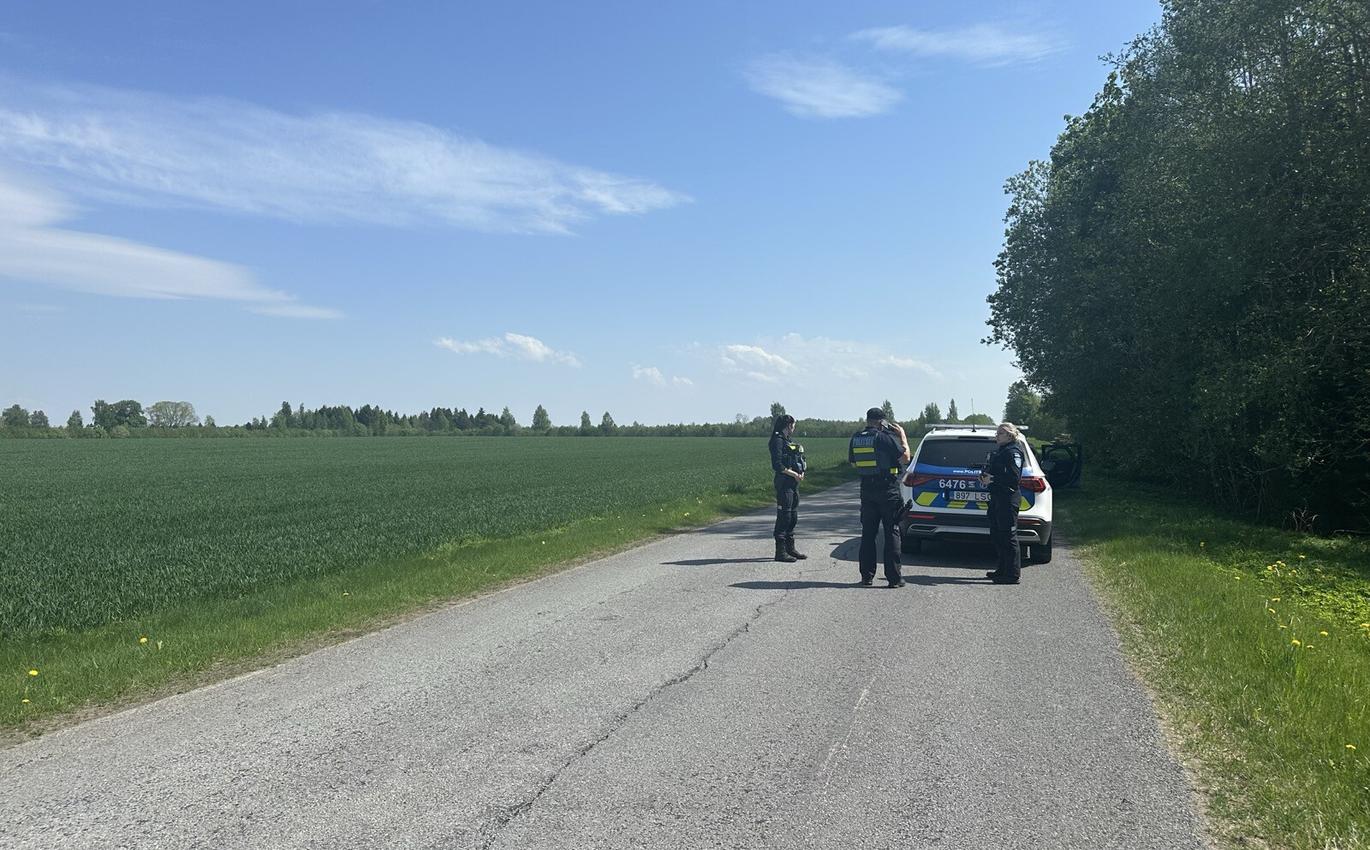
Põltsamaa – For a few minutes, around midday on Tuesday 19 May, the sky over central Estonia became a theatre of war. An unmanned aircraft that had entered national airspace was intercepted and shot down by a NATO fighter jet between Lake Võrtsjärv and the town of Põltsamaa. The wreckage came down at the edge of a field, in a wooded area near the village of Kablaküla, about thirty metres from the nearest inhabited house. No one was injured. But the incident - the most striking in what has become a recurring series - summed up in a matter of hours everything that makes the north-eastern flank of the Atlantic Alliance vulnerable: a drone, probably belonging to an ally, diverted by enemy electronic warfare, shot down over NATO territory, and a propaganda machine already poised to rewrite the facts.
The sequence: twelve minutes of alert
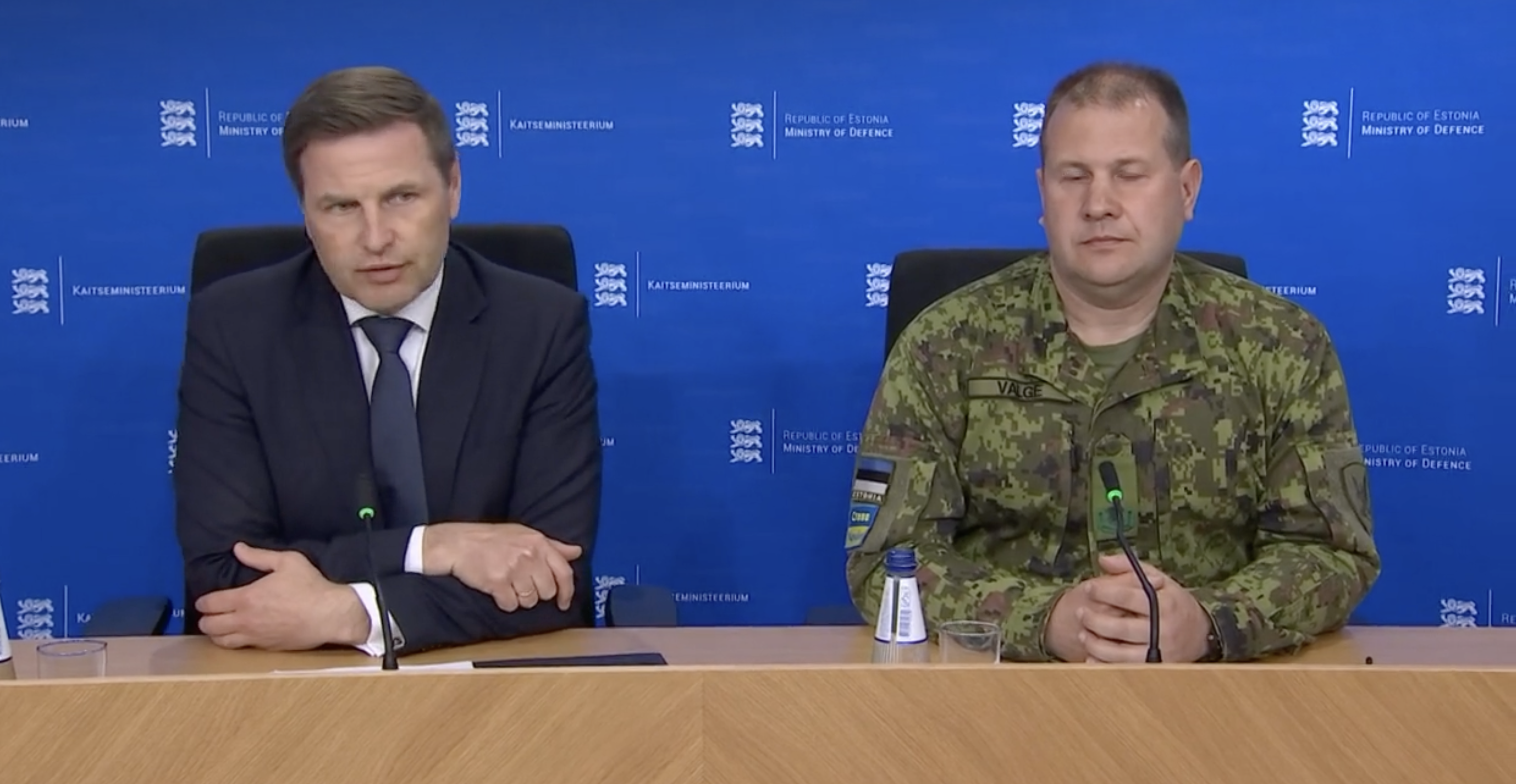
The sequence, reconstructed by Estonia’s Defence Minister Hanno Pevkur at a press conference, unfolded rapidly. Radar and Estonian air force systems, together with an advance warning from Latvian colleagues, detected a possible threat even before the aircraft entered Estonian territory. When the drone did cross the border, around midday, the previously agreed procedures were triggered. It was intercepted by Romanian F-16s from the Baltic Air Policing mission, based in Šiauliai, Lithuania, which shot it down in the area between Võrtsjärv and Põltsamaa. The drone fell in a rather marshy area.
A resident of Kablaküla said he had seen two fighter jets flying over the area, then heard a loud bang, and then saw the drone fall from the sky, followed by a second explosion close to the ground. The detonations, he said, were so loud that they could be heard as far away as Põltsamaa. Bomb disposal units, rescue vehicles and other internal security authorities were deployed to the scene.
The air alert, issued through the emergency messaging system to people in the counties of Tartu, Jõgeva, Viljandi, Valga, Võru and Põlva - and also received by residents as far away as Tallinn - was lifted at 12:55.
The eyewitness accounts: a less clear-cut picture
It is worth noting that not all witnesses confirmed such a straightforward shoot-down. Kalle Kütt, an entrepreneur who runs an adventure park in the village of Valma, on the shore of Võrtsjärv, was there when the alert arrived: he heard an unusual noise in the sky, which sounded to him like at least two aircraft, but he neither saw nor heard any shoot-down. The Lake Võrtsjärv museum reported that a raft with students on board had remained on the water for an hour and a half without anyone hearing or seeing anything. According to Flightradar24 data, at midday a Swedish air force Gulfstream was conducting reconnaissance flights over Estonia, still active at around 13:30 - a detail that illustrates just how crowded and monitored the airspace was during those minutes.
On the domestic political front, Prime Minister Kristen Michal announced the shoot-down directly in front of parliament, saying he had just received the news and presenting it as proof that Estonia is able to defend its own territory. That was an understandably reassuring reading, although Air Force Commander Uku Arold implicitly qualified it by explaining the rules of engagement: in peacetime, before any shot is fired, the target must be visually identified, and it is not permitted to open fire on the basis of sound or a radar echo alone. The shoot-down, Arold acknowledged, was made possible above all by favourable weather conditions. This is a crucial point: the success of today’s operation depended partly on the good fortune of clear weather, not only on the capability of the system.
Whose drone was it
The prevailing hypothesis, voiced immediately by Marko Mihkelson, chairman of the Estonian parliament’s Foreign Affairs Committee, and not denied by the government, is that it was a Ukrainian drone diverted from its course by electronic interference. Pevkur stressed that Estonia has not granted the use of its airspace to anyone except its own allies, and that Ukraine had made no such request. In a phone call shortly after the event, the Ukrainian Defence Minister - Deputy Prime Minister Mykhailo Fedorov - apologised for what had happened, while, according to Pevkur, expressing satisfaction that Estonia had shot the aircraft down.
Not an isolated case
Today’s incident did not come out of nowhere, and that is what makes it significant. It is the latest in a chain. In August 2025, an attack drone of Ukrainian origin exploded in a field in the village of Aakre, in Tartu County, shaking the windows and walls of nearby homes; the authorities discovered it only after a farmer reported it. The investigation by the Internal Security Service, Kapo, closed in December 2025, established that the aircraft had entered Estonia through Russian and then Latvian airspace, on a straight trajectory, and that it bore traces of explosives from an attack drone - though investigators were unable to identify those responsible or prove any intentional act: nothing indicated that Estonia had been the target.
In March 2026, a drone launched from Russia struck the chimney of the Auvere power plant, less than three kilometres from the Russian border and around fifty from the attacked Ust-Luga oil terminal; a few days later, several drones violated Estonian airspace in a single night, one of them falling in a field in Tartu County. On that occasion Colonel Arold described the context without euphemism: nine days after the start of an intense phase of fighting in Leningrad Oblast, close to the Estonian border, the region was seeing a level of military activity not witnessed there since 1944. Even then, several residents reported that the drone explosion had occurred before the alert arrived on their phones - a failure in notification timing that today appears to have been repeated in a less severe form, with the warning issued after contact had already taken place. The common thread is always the same: the Russo-Ukrainian war has spread across the whole of western Russia, Ukraine strikes the enemy’s military and logistical infrastructure, Russia responds with electronic warfare - GPS jamming and spoofing to protect its strategic targets - and some drones, disorientated, end up crossing borders. Estonian military intelligence has repeatedly stated that this interference is not directed against Estonia or NATO allies, and that the country’s alert level has not changed. But the margin between “collateral damage from Russian interference” and “incident on NATO territory” is narrow, and it narrows with each episode.
The same day, across the border
While Estonia was shooting down a drone, the St Petersburg region was experiencing its own day of aerial chaos. Pulkovo airport introduced repeated restrictions: first in the morning, then a second time, and finally a third during the day, after the governor of the Leningrad region, Aleksandr Drozdenko, had declared a drone threat first in the Luga district and then across the entire region. Dozens of flights were cancelled or delayed - to Moscow, Nizhny Novgorod, Kaluga, Dubai and other destinations. Similar restrictions had previously affected Pskov airport. Russian air defences claimed to have shot down unmanned aircraft over the Leningrad region. This is the backdrop that explains the Estonian incident: the drones that today made St Petersburg’s airspace unusable and the one that fell on Põltsamaa most probably belonged to the same wave. The systematic closure of Russian airports in the north-west has now become a regular accompaniment to Ukrainian incursions in the area.
What remains
What remains is an air defence system that worked, but in favourable conditions and under rules of engagement that in peacetime require the target to be seen before it is struck. What remains is an alert system that continues to arrive a few seconds behind events. What remains is a border - the one between a tolerable incident and escalation - that every diverted drone brings a little closer. And what remains is an uncomfortable truth that Pevkur himself has acknowledged in the past: as long as the war in Ukraine continues, episodes like the one in Põltsamaa will continue to occur. Estonia is buying radars capable of detecting low-flying objects and has launched industrial cooperation with Kyiv on drones and countermeasures, but - as the minister himself admitted, citing the Ukrainian experience - 100 per cent coverage does not exist anywhere. The investigation, as in every similar case, is in the hands of Estonia’s Internal Security Service. If recent history is any guide, it will establish the Ukrainian origin of the aircraft and the dynamics of its diversion, but it is unlikely to identify anyone responsible or prove intentionality. In the meantime, the Estonian government’s request to Kyiv remains the same one it has been repeating for weeks: keep your drones away from Estonian airspace. The simplest way, Pevkur said, is more effective Ukrainian control over its own operations. It is a reasonable request. It is also, until proven otherwise, a request that every new air alert shows has not yet been met.
S.V.
Silere non possum