Graz - The Austrian Bishops’ Conference has held its first plenary assembly of 2026 in Styria, with four days of meetings split between the Haus der Frauen formation centre in St. Johann bei Herberstein and the parish of Pischelsdorf. It has been a week shaped by highly concrete issues: the condition of persecuted Christians, the wars in the Middle East and Ukraine, the continuing path of synodality, the role of women in the Church, the redistribution of responsibilities among the bishops, and a number of social questions affecting Austria, from poverty to education. For Archbishop Josef Grünwidl, appointed Archbishop of Vienna and consecrated in January, this was the first plenary assembly he attended as a member of the episcopal body in his new office.
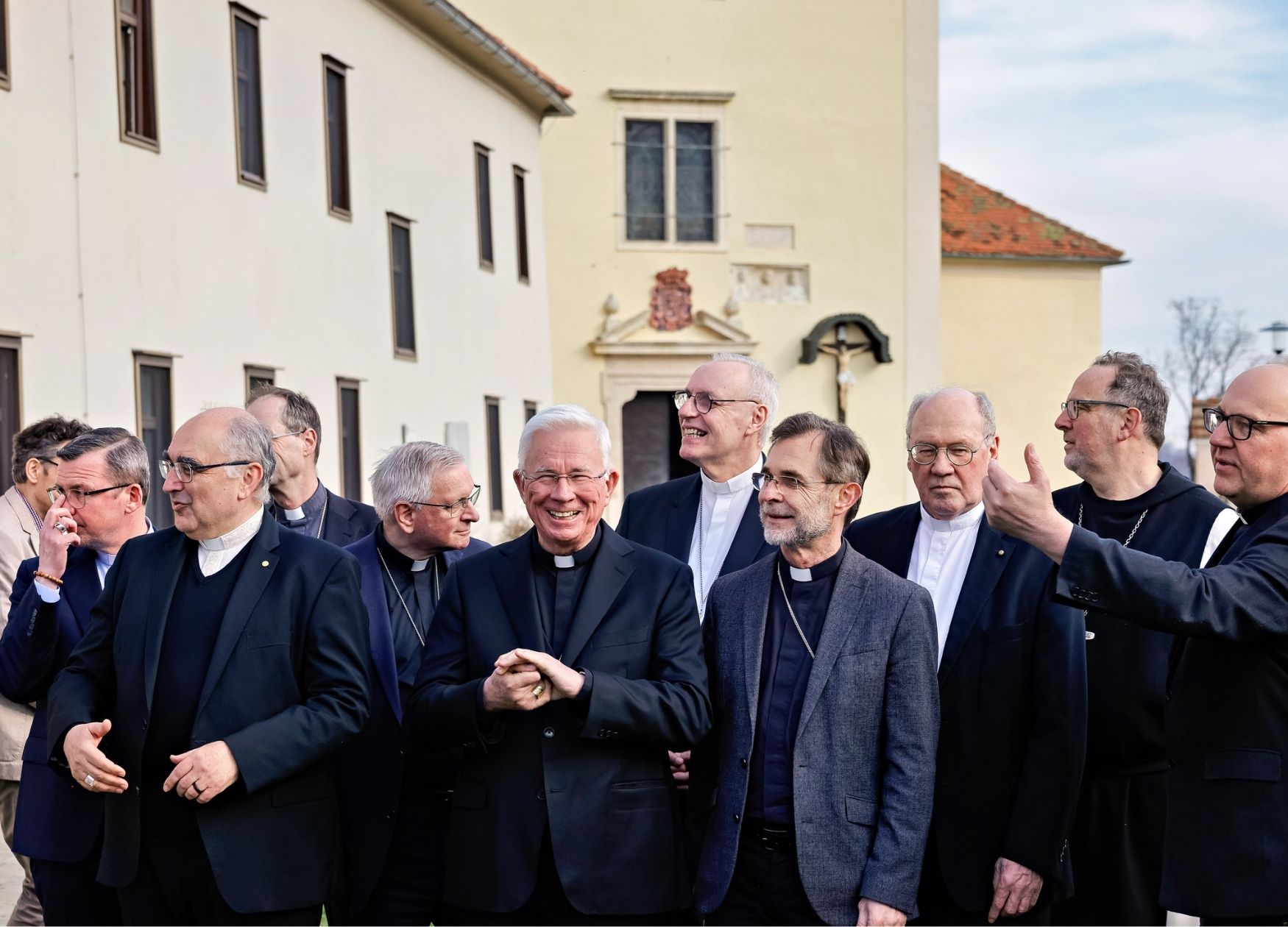
The proceedings opened on Monday 9 March with a study day devoted to the situation of persecuted Christians around the world. The meeting was hosted by the Bishop of Graz-Seckau, Wilhelm Krautwaschl, who drew attention to a reality the bishops believe is too often overlooked: Christians, he said, are today the religious community most affected by intolerance, discrimination and persecution. That same day also saw strong concern emerge over the widening of the conflicts now under way. The President of the Bishops’ Conference, the Archbishop of Salzburg, Franz Lackner OFM, spoke of the risk that the wars could spread until they became a veritable “general conflagration”, and announced that the bishops would also take a public position in relation to politics. The Bishop of Innsbruck, Hermann Glettler, insisted on the need to strengthen an authentic ethic of peace, placing the Church alongside those who suffer and calling for a sense of future hope to be preserved even amid an ever more deteriorating international landscape.
The first day of work also addressed a second major issue, namely synodality. The bishops took stock of the continuation of the process launched by Pope Francis, with the aim of embedding a more participatory and shared style within parishes and across the various realities of ecclesial life. Lackner explained that, after months of reflection in the dioceses, the process had now moved into the phase of concrete steps. Grünwidl, at his first plenary as Archbishop of Vienna, identified the consolidation of synodal work in local communities as one of the chief matters before the assembly. In this context, the issue of women in the Church also resurfaced: the Viennese archbishop described an increase in the presence of women in positions of responsibility as “urgently necessary”, stressing the need for a Church more capable of valuing the charisms and abilities of women.
Also on Monday, the bishops set in motion another important step for the internal life of the Bishops’ Conference: the new allocation of thematic responsibilities among its members. Commissions and areas of responsibility are assigned for a five-year term, and this year’s plenary has been tasked with determining whether the present distribution still corresponds to pastoral and organisational needs. Bishop Krautwaschl spoke of the need to strengthen the bishops’ common work; Archbishop Lackner also emphasised the importance of a more efficient distribution of day-to-day responsibilities. Alongside ecclesial matters, the agenda also included a number of very concrete social questions, such as poverty linked to fiscal consolidation policies, schools, and the engagement of the laity.
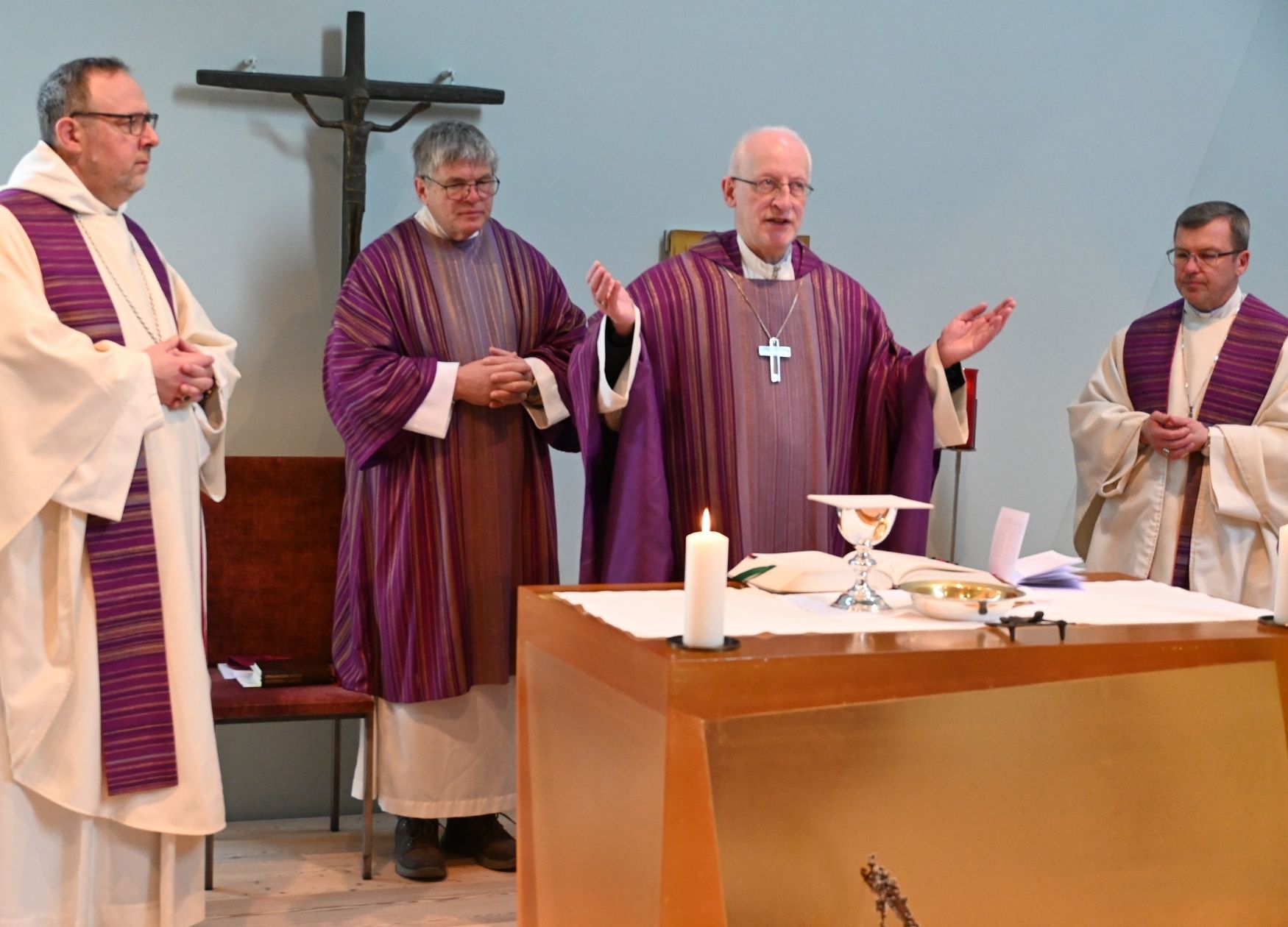
The following day, Tuesday 10 March, proceedings continued with a Eucharistic celebration in which the Auxiliary Bishop of Vienna, Franz Scharl, offered a reflection centred on forgiveness. Commenting on the day’s Gospel, Scharl described Christian forgiveness as an anticipation of the Resurrection, insisting that Christians are called to forgive generously because God himself shows generous mercy towards man. In his homily he referred to Ceija Stojka, a Lovara Roma artist and writer who, as a child, survived three Nazi concentration camps. Scharl, who within the Bishops’ Conference is responsible for matters relating to Roma, Sinti and Jenisch communities, presented Stojka as a credible witness to Christian forgiveness, recalling how in her writings and prayers she came to express forgiveness even towards her own tormentors. Tuesday therefore added a sharply defined spiritual dimension to the reflection on conflicts and persecution: the Christian response is not expressed only through denunciation, but also through an evangelical practice that engages the memory of evil and its possible transfiguration.
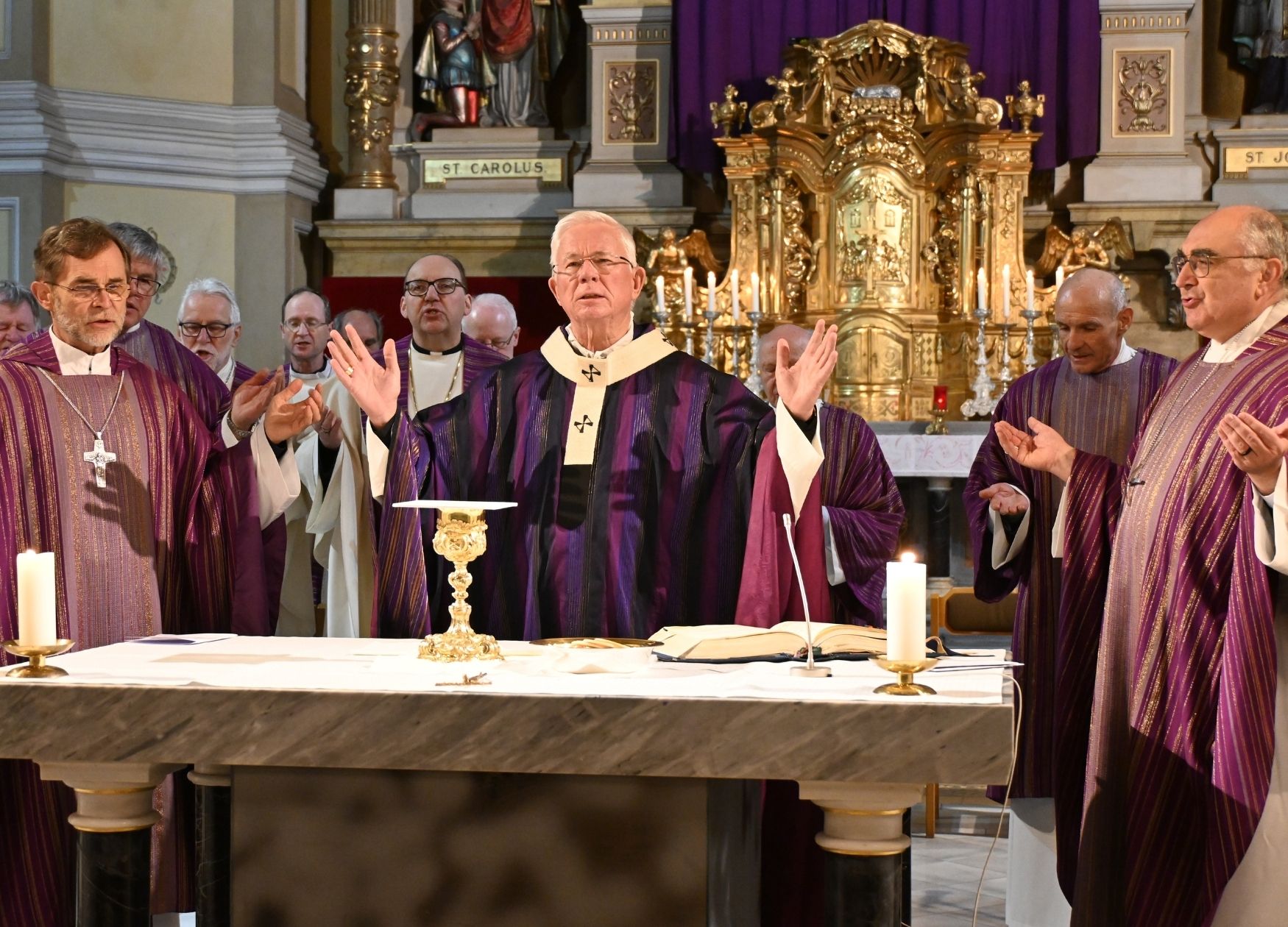
The central liturgical moment of the week took place on Wednesday 11 March in the parish church of Pischelsdorf, where the bishops celebrated the solemn Holy Mass that marked the public high point of the plenary assembly. The celebration was presided over by the President, Archbishop Franz Lackner, while the homily was given by Archbishop Josef Grünwidl. It was one of the most controversial interventions of the entire week and accordingly drew press attention. The Archbishop of Vienna argued for the need for a Church open to change, capable even of revising precepts and ecclesiastical norms when this would help lead people more deeply into a life oriented towards God. The central issue in his homily was the relationship between canon law and pastoral care. Grünwidl acknowledged that rules and provisions are necessary in ecclesial life, but reiterated that their purpose remains the good of souls, that is, people’s real encounter with God and genuine growth in the life of the Gospel.
Turning to concrete cases, the archbishop referred to the divorced and remarried and to relationships that do not correspond to the ideal laid down by Catholic marriage law. In such situations, he said, a mere appeal to the rules is not enough. What is needed instead is pastoral work capable of listening to people’s actual circumstances and of seeking solutions that help and heal. In the same homily, Grünwidl also referred to the recent Vatican document on the participation of women in the life and governance of the Church, arguing that a Church truly more faithful to the Gospel will know how to listen more attentively to women’s voices and involve them in decision-making processes. To do so, he admitted, it will also be necessary to intervene in long-established practices and traditions of long standing. The most controversial line in his intervention was his assertion that what comes from the Holy Spirit cannot be stopped by canon law. The homily concluded with a reference to Saint Joseph, presented as a just man because he was capable of going beyond a mechanical application of the law in order to do justice to the concrete person before him.
Grünwidl’s was a homily which, rather than engaging seriously with the Gospel of the day and offering concrete criteria for living it in daily life, took on the character of an ideological manifesto. His words are problematic both in method and in substance: the archbishop says something and immediately softens it, pushes to the edge and then retreats, as though seeking gradually to force a boundary by repeated blows. The direction, however, appears clear: to open the way for women’s access to the ordained ministry.
At this point, there is really only one question: why does the Holy See continue to appoint bishops, above all in contexts such as Germany and Austria, who place themselves in evident discontinuity with the Church’s doctrine? The issue, in fact, is not simply one of canon law, as Grünwidl maintains. What is at stake here is Catholic doctrine, that is, Christ’s mandate to his Church, and therefore a matter pertaining to divine law. This is the real crux of the matter: what is under pressure here is not merely a set of disciplinary rules to be updated, but constitutive elements of the Catholic faith that some would like to strike at and remove.
For that reason, it is futile to complain every day, in the Vatican, about the drift of the German episcopate and then continue to promote figures who embody the same outlook. If there is a real intention to confront the problem, the first step must be to appoint bishops with sound formation and sound doctrine. Otherwise, the risk of schism ceases to be a remote hypothesis and takes on concrete form. And it concerns not only Germany. It now concerns Austria as well.
At the end of Wednesday’s celebration, Archbishop Lackner also drew attention to the international situation, inviting the faithful to pray for peace in a world which, he said, “is burning in every corner”. Immediately after Holy Mass, the members of the Bishops’ Conference took part in an official reception with the authorities of the Land of Styria, led by Governor Mario Kunasek and his deputy Manuela Khom. Present at the meeting were representatives of the Diocese of Graz-Seckau, including the director of Caritas Styria and president of Austrian Caritas, Nora Tödtling-Musenbichler, as well as the Evangelical Superintendent Wolfgang Rehner. In his remarks, Kunasek spoke of a “good and constructive” collaboration between the Catholic Church and the civil institutions of Styria, insisting that, while remaining distinct, the two spheres share the task of offering guidance and confidence.
Today, Thursday 12 March, the plenary assembly concludes with its final working sessions, intended to draw together the threads of the questions addressed over these days: the condition of persecuted Christians, the bishops’ position on international conflicts, the reception of synodality in the dioceses, the issue of women’s presence in structures of ecclesial leadership, the internal reorganisation of episcopal responsibilities, and the social emergencies confronting the Church in Austria.
During the week, provision had also been made for an exchange with the Apostolic Nuncio in Austria, Archbishop Pedro López Quintana. For the final overall picture, it will be necessary to wait for the press conference already announced by Lackner in Vienna for Friday 13 March, when the president of the Bishops’ Conference will officially present the outcome of these four days of work.
Fr.F.G.
Silere non possum