New York - “Lord, take my new life… call me to serve.” With those lines from Alma Misionera, Archbishop Ronald A. Hicks set the tone at the start of his ministry on Friday 6 February 2026, the day he canonically took possession of the Archdiocese of New York.
The opening of the liturgy was marked by a gesture rich in symbolism: the new archbishop knocked three times, using a golden mallet, on the doors of St Patrick’s Cathedral. Hicks appeared visibly moved, aware of the weight of a threshold that is not merely physical: it signals the concrete beginning of the responsibility of pastoral governance.
Welcoming the new shepherd were cardinals, many bishops and priests, men and women religious, and a significant presence of lay faithful: an image which, even in the way the assembly was arranged, reflected an archdiocese marked by a plurality of ministries and vocations.
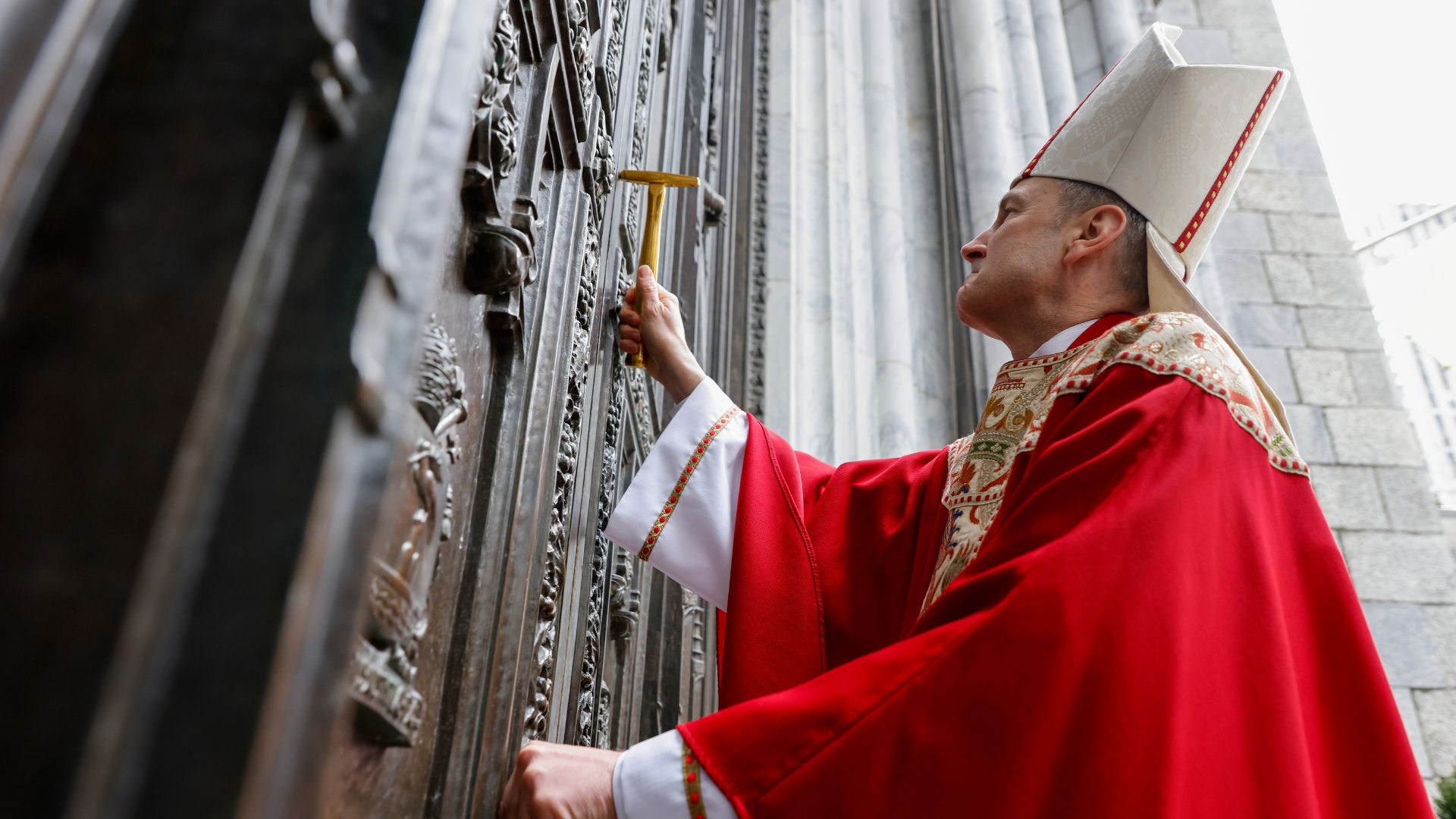
The canonical taking of possession
The address of the Apostolic Nuncio, Cardinal Christophe Pierre - who is also nearing the end of his own mandate - served as the opening note of the celebration. When Pierre turned to Cardinal Timothy Dolan, the assembly responded with a prolonged applause that rose to a standing ovation. A detail then made the moment even more striking, breaking the solemnity: the Nuncio invited everyone to sing Happy Birthday to Cardinal Dolan, as it was his birthday.
The heart of the canonical taking of possession took place with the reading of the Pope’s bull of appointment. The Nuncio proclaimed it according to the rite, and the new archbishop then displayed it publicly, moving among clergy and faithful as prescribed. It is an act that makes visible both the source of the episcopal mandate and its destination: the people entrusted to that ministry. Immediately afterwards, Dolan and Pierre accompanied Hicks to the cathedra: by taking his seat solemnly, the new shepherd officially became Archbishop of the Archdiocese.
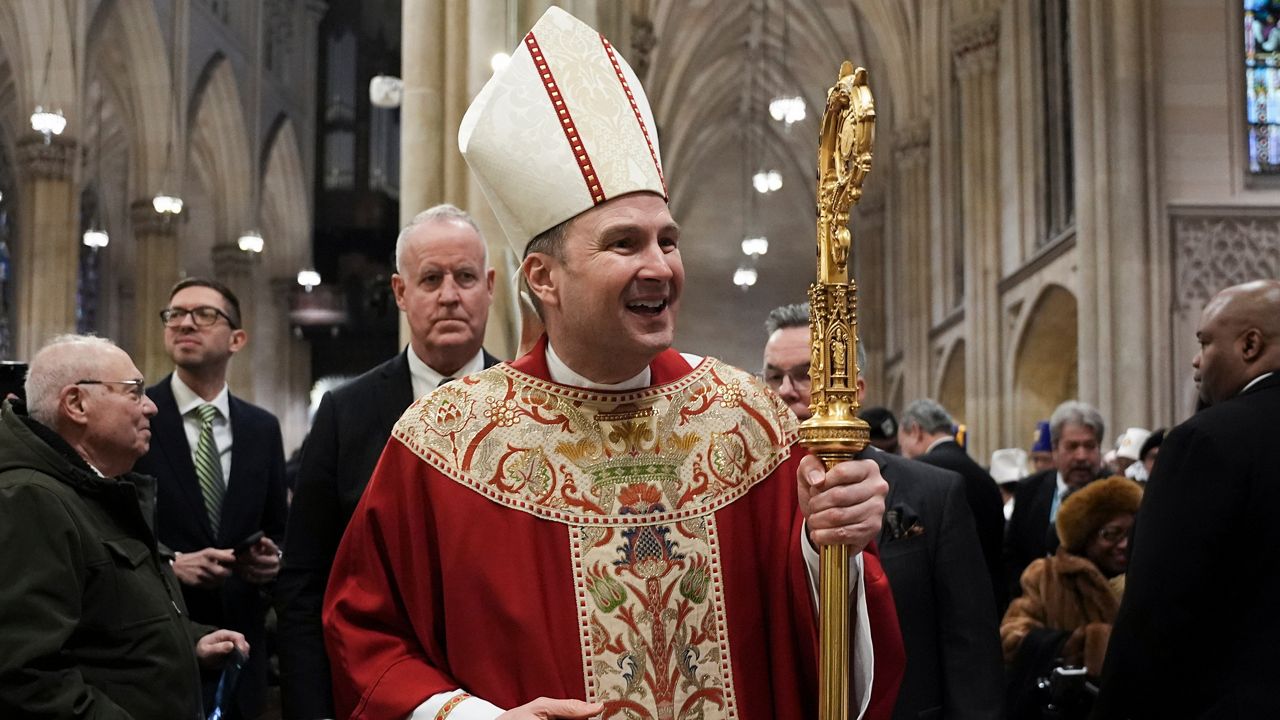
Archbishop Hicks: “My heart is full of gratitude”
In his homily, Hicks chose an approach that was both personal and programmatic. He said that his favourite hymn is Anima Misionera, and he did not mention it as a simple musical preference: he presented it as a synthesis of the vocation of a Church called to live as a “missionary disciple”. The choir later sang that piece during the Communion rite. The archbishop said: “I love Jesus. I love the Church. And I love people.” He placed at the centre not an organisational programme, but a relationship. In his words of thanks, he expressed gratitude to both the Nuncio and his predecessor, Dolan.
The prelate returned to the Gospel mandate to “go and make disciples” as an operational horizon: a Church on the move, not turned in on itself, committed to formation and to public witness. Hicks also recalled a recent teaching of Pope Leo XIV, linking it to the Church’s missionary identity: proclaim the Gospel with credibility, defend human dignity, care for the vulnerable, build bridges, listen, and foster healing.
fr.T.R.
Silere non possum