Archdiocese of Westminster
Archbishop Richard Moth has taken canonical possession of the Archdiocese of Westminster.
Click here
Archdiocese of New York
Archbishop Ronald Aldon Hicks has taken canonical possession of the Archdiocese of New York.
Click here
Pope Leo XIV: Letter to the Clergy
The Holy Father has written a letter to the clergy of Madrid, offering an important roadmap for becoming holy priests.
Click here
Archdiocese of Sassari
Pope Leo XIV has appointed the new Archbishop of Sassari.
Click here
Diocese of Rome
Pope Leo XIV has appointed four new auxiliary bishops for the Diocese of Rome.
Click here
What’s new in the community
Disarming Words: Leo XIV’s Lent Against the Web’s Poison
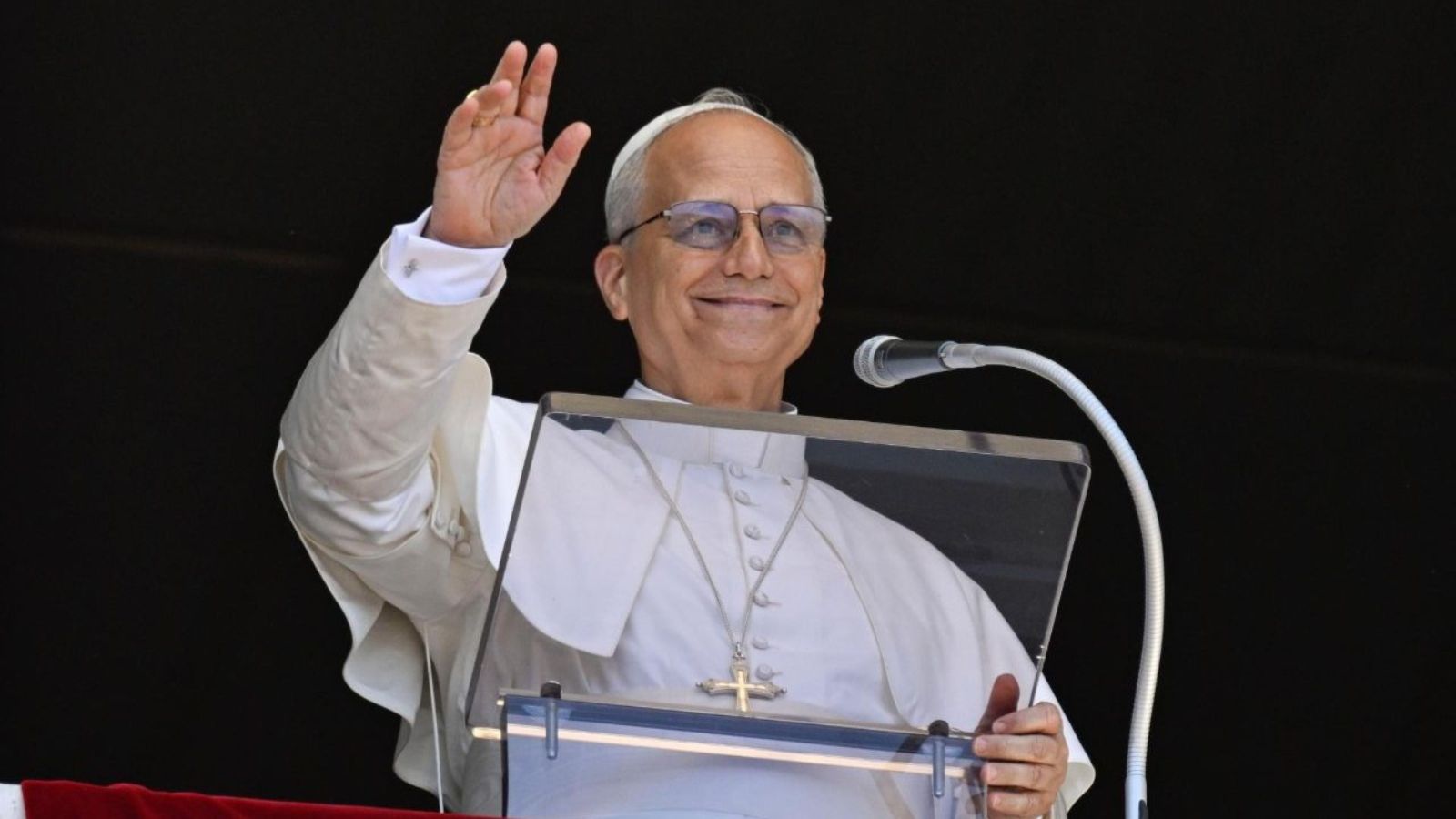
We live immersed in a constant din. We scroll through screens packed with shouted opinions, acid comments, and snap judgements. In a landscape where the keyboard so often becomes a blunt weapon, the Holy Father’s words sound less like a purely spiritual warning and more like a pressing social necessity: “Let us disarm our words, and we will help to disarm the Earth.”
It is a powerful invitation, almost revolutionary in its simplicity. Pope Leo XIV reminds us that peace is not an abstract ideal to be left to international treaties, but a daily practice that begins with our lips and our fingers.
We often think of peace as the absence of war between nations. The Pope is shifting the focus to the micro-world of our personal relationships. “Peace begins with each one of us: with the way we look at others, listen to others, speak about others,” he said recently. It is as if Leo were telling us that the Church - both in its real-life communities and in its digital presence - has become trapped in a vicious circle from which it must break free quickly, because the system is degenerating. In his Ash Wednesday homily, he stated: “Sin is personal, certainly, but it takes shape in the real and virtual environments we frequent, in the attitudes by which we condition one another - often within genuine ‘structures of sin’ of an economic, cultural, political and even religious order.”
Those words made me think. We are so immersed in certain dynamics that we no longer see how wrong they are. And because almost everyone, in one way or another, behaves the same way, we end up normalising them - so much so that we no longer recognise them as sins, not even in the confessional. Speaking ill of others, for instance, has become a habit, almost a way of “making conversation”. There are clergy gatherings where people do nothing but speak badly of others. Small circles form, factions, where even the most carefully veiled criticisms are still aimed at someone. And if we have nothing unkind to say about someone, we risk inventing it - or else falling silent.
Think about it: how often have you had a positive conversation - perhaps over a coffee - where you shared the good things happening in your life? And how often, instead, did you spend the whole time complaining?
Leo XIV’s words urge us to think of communication as an act of responsibility. This is not merely about “being polite”, but about building a social fabric that does not tear at the first disagreement. It is a call to concreteness: before pointing at the world’s major conflicts, we are asked to examine how we handle conflict in our parish, in the seminary, in our community, in our block of flats, at work, or in the altar servers’ group chat.
A fast from words that wound
His Lenten Message was particularly effective, because he proposed a form of fasting different from the usual. Many have asked why Silere non possum chooses to highlight some bishops’ homilies more than others. In this first issue of the Newsletter, we can reveal a “secret”: we publish the homily that offers both the faithful and the clergy something genuinely practicable in daily life - and capable of producing real change. I have never had much time for a certain style of preaching: analyses that may be sound in exegesis, doctrine, morals, culture, and so on… yet what is left in practice? When the faithful go home, do they carry a theology lecture with them, or a concrete invitation? Those words should offer a prompt that allows someone to come before the Lord and say: “Today I will try to improve in this.”
That is the criterion. And with Pope Leo XIV we can recognise the same approach in his own words. In the Lenten Message he called all of us to a fast centred above all on abstaining from sin. He urged a fast from “words that strike and wound”, asking us to avoid idle chatter, gossip, and speaking ill of those who are absent and cannot defend themselves. In an age when “I’m just saying what I think” is often used as an excuse for cruelty, the invitation to measure our wordsbecomes an act of human resistance. It means choosing silence over insult, reflection over instinctive reaction.
Converging voices: a shared urgency
Jean-Christophe Seznec, in The Magical Virtue of Measuring Words, observes that we live “full of words, on the verge of overdose.” For that reason, his book argues for a more accurate lexicon and offers a simple yardstick: “recover the relevance of what we choose to express, taking the context into account.” Before speaking, he suggests putting the conscience to work: “What do I want to say? To whom?”, and “turn your tongue seven times in your mouth before speaking.” When emotions rise, he proposes a concrete habit: write, leave it on standby, and send it only later, with a cooler head. And when an insult comes, do not accept it: “When they are not accepted, they still belong to the one who carries them in his heart.” In this way the fast from words becomes discipline, freedom, and responsibility: less noise, more truth, more charity. And for those looking for a practical compass to navigate the rough seas of the web, there is the Manifesto of Non-Hostile Communication. Its ten principles - such as “The virtual is real” or “Words are a bridge” - seem to echo Pope Leo’s teaching. They remind us that behind every screen there is a person, and that online hate has devastating consequences in real life.