Vatican City - The Motu Proprio ‘L’attuale contesto comunicativo’ called for “an information system of the Holy See that is ever more integrated and unified, capable of responding coherently to the needs of the Church’s mission”; yet today’s reality tragically contradicts those expectations. The Dicastery for Communication, despite its imposing structure, proves inert in decision-making, slow to act, and paralysed by systemic inconclusiveness.
Day after day one witnesses endless meetings, with prominent figures rotating around the table - Ruffini, Tornielli, Bruni, Monda, Menichetti, Govekar, Masci, Nusiner and others: a truly assembly - like dynamic, in which compromises, postponements and constant mediation multiply. Each sector strenuously defends its own sphere of influence and priorities, producing not genuine coordination but permanent negotiation that drains any aspiration to governance of real substance. The plurality of voices thus becomes fragmentation and deadlock, rather than synergy and operational effectiveness.
An operational crisis and a crisis of theological-pastoral vision
At the heart of the problem lies not only an operational crisis, but a profound crisis of vision and of theological-pastoral direction. Pope Francis himself, in May 2021, had lucidly grasped the paradox of an advanced machine incapable of reaching its audience, asking: “how many people do we really reach?”. That question resonates today with even greater force, highlighting a disconnect between the structure and its fundamental mission.
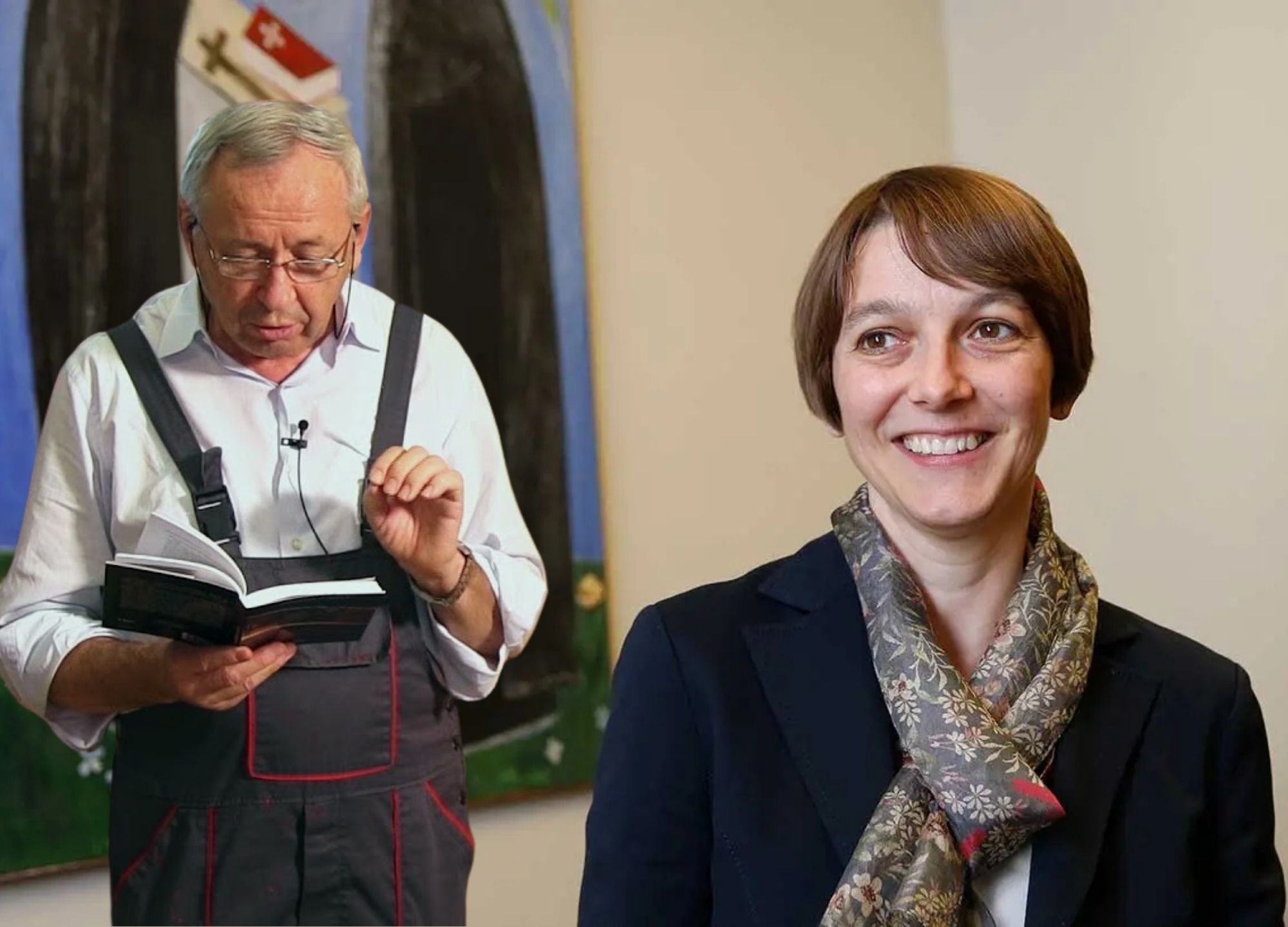
The crisis of the Theological-Pastoral Directorate and the role of Nataša Govekar
The core of the problem is not confined to an operational crisis, evident in the complete inadequacy of the figures who lead and make up the Dicastery for Communication, but is rooted in a profound crisis of vision and theological-pastoral direction.
In particular, Nataša Govekar, brought into Palazzo Pio thanks to her close relationship with Marko Ivan Rupnik, has shown herself to be lacking the competence, formation and capacity required for a role that ought to be central within the Dicastery.
The Dicastery’s Statutes clearly define the responsibilities of the Theological-Pastoral Directorate, which include:
Developing a theological vision of communication, guiding communications content;
Promoting the pastoral activity of the Roman Pontiff, integrating it with supporting theological content, in words and images;
Fostering theological-pastoral formation, building a network with the particular Churches and Catholic associations active in the field of communication;
Raising awareness among the Christian people of the importance of the media, especially on the World Day of Social Communications, in order to promote the Christian message and the common good.
Over the years, however, Nataša Govekar has displayed not only an attitude of power and arrogance within the Dicastery, but also a total lack of action with regard to these fundamental tasks. What, then, would it mean in practice to “promote the pastoral activity of the Roman Pontiff, in words and images, and contextualise it with theological content that supports it”? Perhaps publishing on Vatican News images of Marko Ivan Rupnik’s works - moreover behind payment - with the Dicastery having funded the Centro Aletti so they could be disseminated? Or the opposition to their removal, which seems to have been the only significant decision-making activity?
Today the Dicastery for Communication suffers from an evident lack of doctrinal and spiritual guidance within its communications flow. The Theological-Pastoral Directorate, once a pillar of doctrinal coherence and a promoter of a Christian use of the media, now appears stripped of its essential functions. Its responsibility, which should be central, proves intangible, lacking the incisiveness needed to orient content in an ever more complex and challenging digital context.
Selection of authors, self-referentiality, and social media
The content published on Vatican News, which as we have said effectively takes the form of Andrea Tornielli’s blog, as well as in L’Osservatore Romano, is often the result of contributions written by or commissioned from a circle of friends and acquaintances who nonetheless lack authority or theological competence. It is clear that the selection of writers, based on questionable criteria – as in the case of the “newly hired person linked to friends of friends, recently made permanent after an internship”, who identifies on Facebook a young religious popular on social media - represents a radical departure from the original vocation of L’Osservatore Romano. At one time, this historic daily stood out for authoritative figures and refined bylines, capable of offering deep, high-level analysis. Today, by contrast, one observes a regression, with requests for contributions even addressed to religious who, instead of living their contemplative vocation fully, use social media in a wholly inappropriate and narcissistic manner. This system, far from guaranteeing quality and depth, reveals a self-referential and unprofessional management of the Pope’s media.
A further confirmation of this dynamic emerges from observing social-media activity. The personal pages of key figures such as Andrea Tornielli, Massimiliano Menichetti and Andrea Monda clearly reveal the modus operandi adopted. Tornielli, for example, devotes much of his time to posting in defence of Pope Francis, even recently reacting to marginal or irrelevant comments, such as those appearing in newspapers like Libero, which he deems worthy of rebuttal. Obviously, these are duly reposted by his protégé Salvatore Cernuzio and by employees such as “the authoritative cartoonist Sinodino”, as he has been cleverly dubbed within the walls. Yet this selective attention betrays a lack of awareness - or perhaps a deliberate omission - regarding content that is truly viral and incisive, which Tornielli does not address because it is supported by documentation and irrefutable evidence. Such content, in fact, exposes not only the shortcomings of the Dicastery’s communications system, but also the complete incompetence of those who lead it.
The paradox of Study Group 3: duplicating functions already provided for
Within this scenario of functionalism - the risk against which Pope Francis himself had warned, describing structures that exist for themselves rather than for mission – an element arises that borders on the paradox. The Final Report of “Study Group No. 3” on the Church’s mission in the digital environment, published yesterday, a document drafted with the participation of the Dicastery’s own leadership - such as the Prefect Paolo Ruffini and the Secretary Msgr Lucio Adrián Ruiz - proposes the “creation of an office, department or commission responsible for accompanying the mission in the digital environment”. This new entity, a “Pontifical Commission for Digital Culture and New Technologies”, would be tasked with “monitoring emerging theological, pastoral and canonical issues”, “preparing documents, guidelines and vademecums”, and “defining formation strategies”.
The proposal is startling. The competences listed for this new, hypothetical commission are nothing other than a precise description of the tasks already assigned by statute to the Theological-Pastoral Directorate of the Dicastery for Communication. The fact that the Dicastery’s leaders propose creating a new structure to carry out tasks that already fall within their remit reveals one of three truths – all alarming: either there is profound ignorance of their own responsibilities and of the structure they lead; or there is an implicit admission of the total ineffectiveness of the existing body, judged so irredeemable as to require duplication; or an attempt is being made to persuade the Pope to create yet another useless structure to distribute a few salaries.
This contradiction is the symptom of an institutional pathology. One calls for the creation of a new body to make up for the deficiencies of one that already exists and is, on paper, fully operational, perpetuating a logic that burdens the Curia rather than streamlining it. Instead of asking why the Theological-Pastoral Directorate fails to fulfil its mission, the preference is to bypass the problem, suggesting a solution that does not resolve the underlying paralysis.
fr.E.G.
Silere non possum