Norcia – Just hours before the solemn celebrations of Saint Benedict in Norcia, we spoke with the Archbishop of Spoleto-Norcia, Renato Boccardo, President of the Umbrian Bishops’ Conference, to understand how this feast - so dear to Benedictine monks across the world - is experienced in the Saint’s birthplace.
The archbishop offered a reflection that weaves together memory, responsibility and the present moment, set against the backdrop of a community deeply bound to its Basilica, which has returned to regular use only in recent months.
 © Archidiocesi Spoleto - Norcia
The Solemnity of Saint Benedict
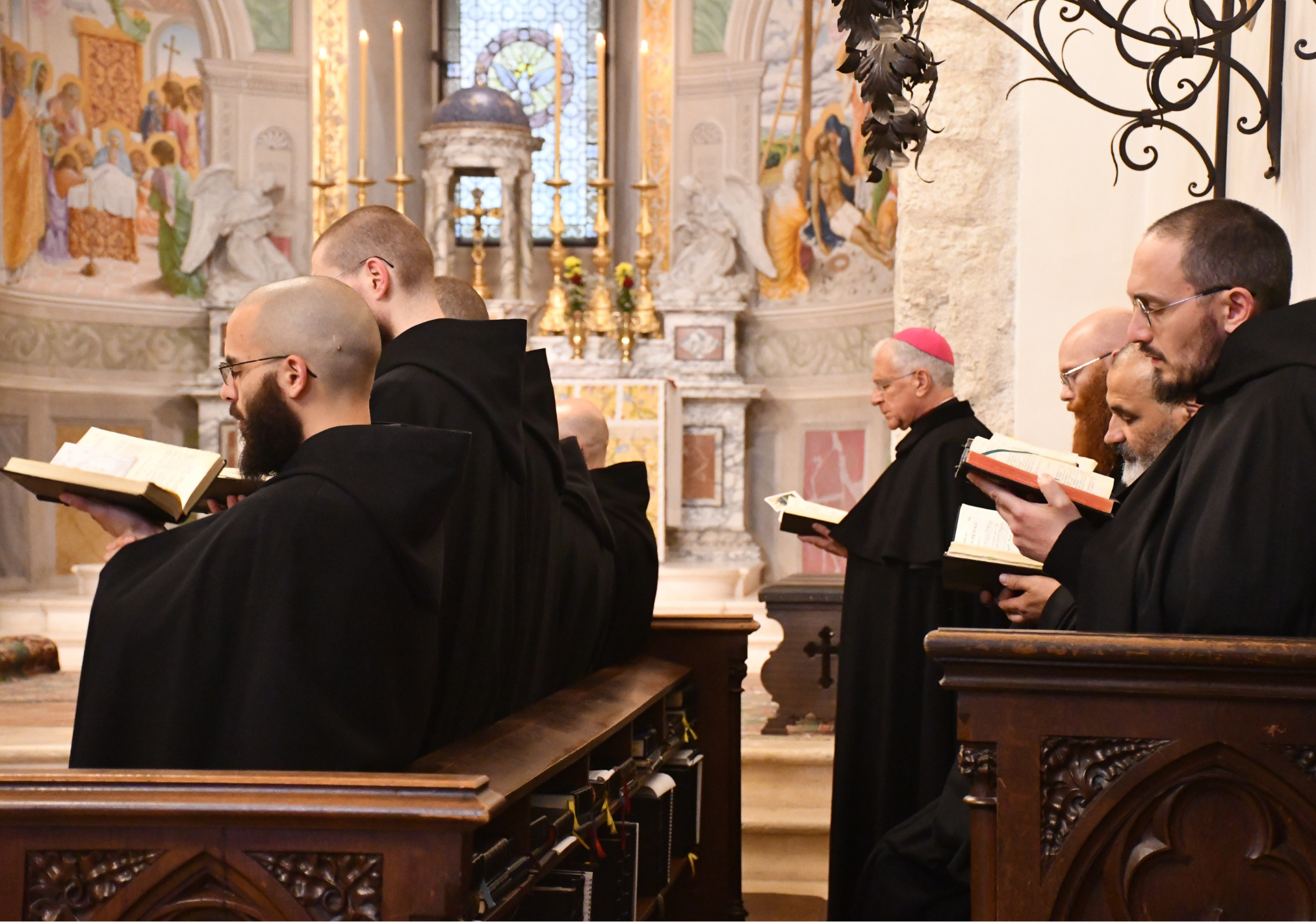
The celebrations dedicated to the Patron of Europe unfolded in a context where the liturgical dimension was closely interwoven with the civic one, marked by broad participation from the faithful, public authorities and monastic communities, and by a constant reference to the theme of peace. The return of the solemnity to the Basilica of Saint Benedict, reopened after the long wound of the earthquake, represented a significant moment not only for Norcia but for the entire diocesan community. “Returning to celebrate in the Basilica,” Mons. Boccardo observes, “has a twofold meaning: on the one hand, a rightful sense of pride; on the other, a sense of responsibility.” It is not, he clarifies, a matter of preserving a monument, but of allowing oneself to be challenged by what Benedict continues to say today, within a society marked by tensions and conflict.
The thread running through the celebrations was explicitly that of peace. From the opening rites, with the arrival of the torch “Pro pace et Europa una”, lit and blessed in Rome and brought to Norcia along a symbolic route, light was entrusted with a precise meaning: to invoke a renewed sense of responsibility among those who hold power, so that they may respect peoples and nations. In his homily during the solemn Mass, the archbishop spoke of a “disarmed and disarming” peace, insisting that one cannot “wage war in order to achieve peace.” These words stand in continuity with the repeated appeals of Pope Leo XIV, which, as Boccardo himself acknowledges, often go unheard. “This has also happened with his predecessors,” he notes, recalling how the words of the Popes have frequently collided with the logic of conflict. The perspective offered, however, does not stop at denunciation. The archbishop insists on a more concrete and everyday level: peace as personal responsibility, built through small but real gestures. “An act of reconciliation, a kind word, a careful use of language”: it is on this terrain that the credibility of Christian commitment is tested. It is no coincidence that, in his homily, Boccardo recalled the Pope’s invitation to “disarm language”, pointing to speech itself as one of the first arenas where violence - or, conversely, peace - is shaped.
 © Archidiocesi Spoleto - Norcia
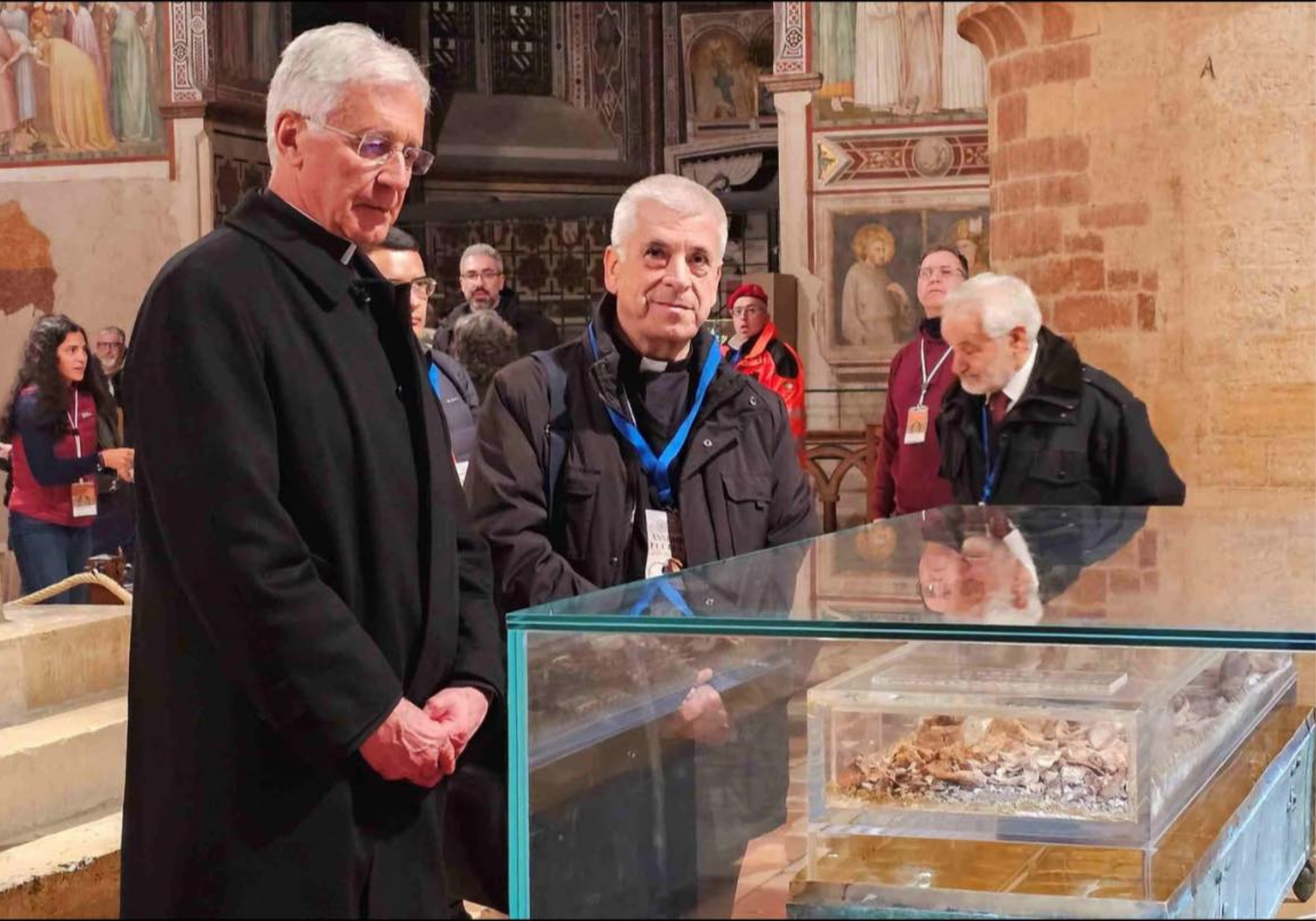
The exposition of the mortal remains of Saint Francis
We also took the opportunity to reflect with the archbishop on another event that has marked recent weeks in the Umbrian ecclesiastical region: the exposition of the mortal remains of Saint Francis. In Assisi, an extraordinary influx of pilgrims was recorded: more than 370,000 people paused in prayer before the reliquary, giving rise to an ecclesial event of considerable significance, not without its usual controversies. Archbishop Boccardo interprets this experience through both an ecclesial and an anthropological lens. “The person and the message of Francis have lost none of their relevance,” he states. Particularly striking in his reading is the emphasis on a form of “revolution” that does not pass through rupture but through construction. Francis remains within the Church; he does not set himself in opposition, and it is precisely in this fidelity that his strength lies.
The most evident fact, however, remains participation. The long queues outside the Basilica, the archbishop notes, cannot be dismissed as a marginal phenomenon. On the contrary, they pose a clear question to the Church. While in Assisi the regional ecclesial assembly was taking place, with more than four hundred delegates reflecting on evangelisation and catechesis, outside thousands of people were waiting for just a few minutes of prayer before the Saint’s relics. “The human person needs a concrete experience,” Boccardo emphasises. To touch, to see, to linger. It is a dimension that directly recalls the Gospel and which, in the archbishop’s view, risks at times being overlooked by a pastoral approach too focused on intellectual categories. This does not mean abandoning reflection, but recognising that Christian faith also passes through gestures, signs and contact. In this light, the event in Assisi becomes a provocation. It is not possible to determine what each pilgrim carried home, yet the very fact that hundreds of thousands undertook a journey to stand before those bones points to a search, to an open question. “If they came, it means they were seeking Someone,” he observes.
Within this framework, Norcia and Assisi emerge as two places where a deeper question surfaces: the need for peace and, at the same time, the search for meaning. The figure of Benedict, “a messenger of peace and teacher of civilisation”, and that of Francis, with the force of his evangelical radicalism, continue to offer two points of reference capable of questioning the present.
Marco Felipe Perfetti
Silere non possum
INTERVIEW
Ten years on, and after the reopening of the Basilica, what ecclesial and civic significance does it have today to return and celebrate the solemnity of Saint Benedict here, in his birthplace?
Returning to celebrate the solemnity of Saint Benedict in the Basilica carries a twofold meaning. On the one hand, there is a legitimate sense of pride. We are pleased and proud to have recovered the Basilica, with all that it represents. On the other hand, there is a sense of responsibility: this is not simply a matter of preserving monuments, but of rediscovering the enduring relevance of Benedict, allowing ourselves to be challenged by his message and seriously asking how it can be proposed today, how it can be made present and alive. Norcia is deeply bound to the Basilica.
What message can the witness of Saint Benedict offer today to the leaders of nations who continue to fuel war, while the repeated appeal for peace that Pope Leo XIV has been making for months in his addresses goes unheard?
In the face of those leaders of nations who continue to fuel war, the witness of Saint Benedict calls to mind the enduring relevance of Christian humanism and of an intelligent coexistence among different peoples. The problem, however, is that there is no willingness to listen. The same happened with the predecessors of Leo XIV. I am thinking, for example, of the appeals made by Saint John Paul II when he went to Damascus and said: “I renew my appeal to all the peoples involved and to their political leaders, that they may recognise that confrontation has not succeeded and never will. Only a just peace can create the conditions necessary for the economic, cultural and social development to which the peoples of the region are entitled.” And yet they did not listen. The same was true of Benedict XVI and Francis: voices crying in the wilderness, left unheard. I believe, however, that we Christians must not give up invoking peace and urging on the international community. We must begin ourselves, first of all, with concrete gestures of peace.
In your homily at the solemn Mass for the solemnity of Saint Benedict, you strongly emphasised the urgency of a “disarmed and disarming” peace, stating that one cannot “wage war in order to achieve peace”, and you also took up Pope Leo XIV’s invitation to “disarm language”.
Yes, it must be we who make gestures of peace, gestures that are woven into the social fabric like seeds of life capable of halting the growth and spread of the seeds of death. I am thinking of a gesture of reconciliation, a kind and merciful word, a careful use of language, just as the Pope said in his message. We need to speak with prudence and intelligence. These may be small things, but they are significant contributions to the building of a climate of peace.
In just over a month, more than 370,000 pilgrims in Assisi paused before the mortal remains of Saint Francis. This initiative has also been accompanied by controversy which, in several cases, seems to overlook the history and concrete life of the Church. What meaning does an event of this kind hold today, both for the faithful and for those who feel distant from faith? And is it still an experience capable of speaking to contemporary man?
I believe that the person and message of Saint Francis have lost none of their relevance. What still strikes people is this discipleship and this revolutionary capacity, though not in order to destroy, but to build. Usually, we are accustomed to revolutions aimed at tearing things down. Francis, by contrast, never adopted the attitude of a wrecking ball; he wanted to build while remaining within the Church. It is easy to step outside and do something parallel. He chose instead to remain within, and he taught us that the sine glossa following of the Gospel guarantees a fulfilled life. I believe this is the message that continues to challenge and stir even our contemporaries.
There really were a great many people who paused there in prayer…
Certainly, it was striking to see the queues of people making their way to the Basilica. As an ecclesiastical region, on Saturday 28 February we held the Regional Ecclesial Assembly. Delegates from all eight of our dioceses were present, and there were more than 400 of us. We reflected throughout the day on evangelisation and catechesis: it was a very beautiful moment. Yet while we were inside, with the risk of simply talking among ourselves, outside there were thousands of people waiting in line so that they could go and pray before the mortal remains of Francis.
I believe this should challenge us. The human person needs a concrete experience, needs to see, needs to touch. In the Gospel, people touched Jesus; they walked for miles in order to see him or to touch him. Perhaps we have become too intellectual. This does not mean that we should not reflect on faith and on the methods of evangelisation, but that we must also take account of this dimension, which is deeply human, deeply tangible. Faced with these bones, people are still willing to queue for hours in order to spend just a few minutes before these mortal remains. So we must ask ourselves: what do they carry home from this experience? We do not know; that is the work of the Spirit. But if they have travelled miles to come here, it means they came in search of Someone. This must challenge us as Church. We must not “resurrect” outdated forms that clearly belong to the past, but neither can we underestimate these manifestations, and we must allow ourselves to be provoked by them.